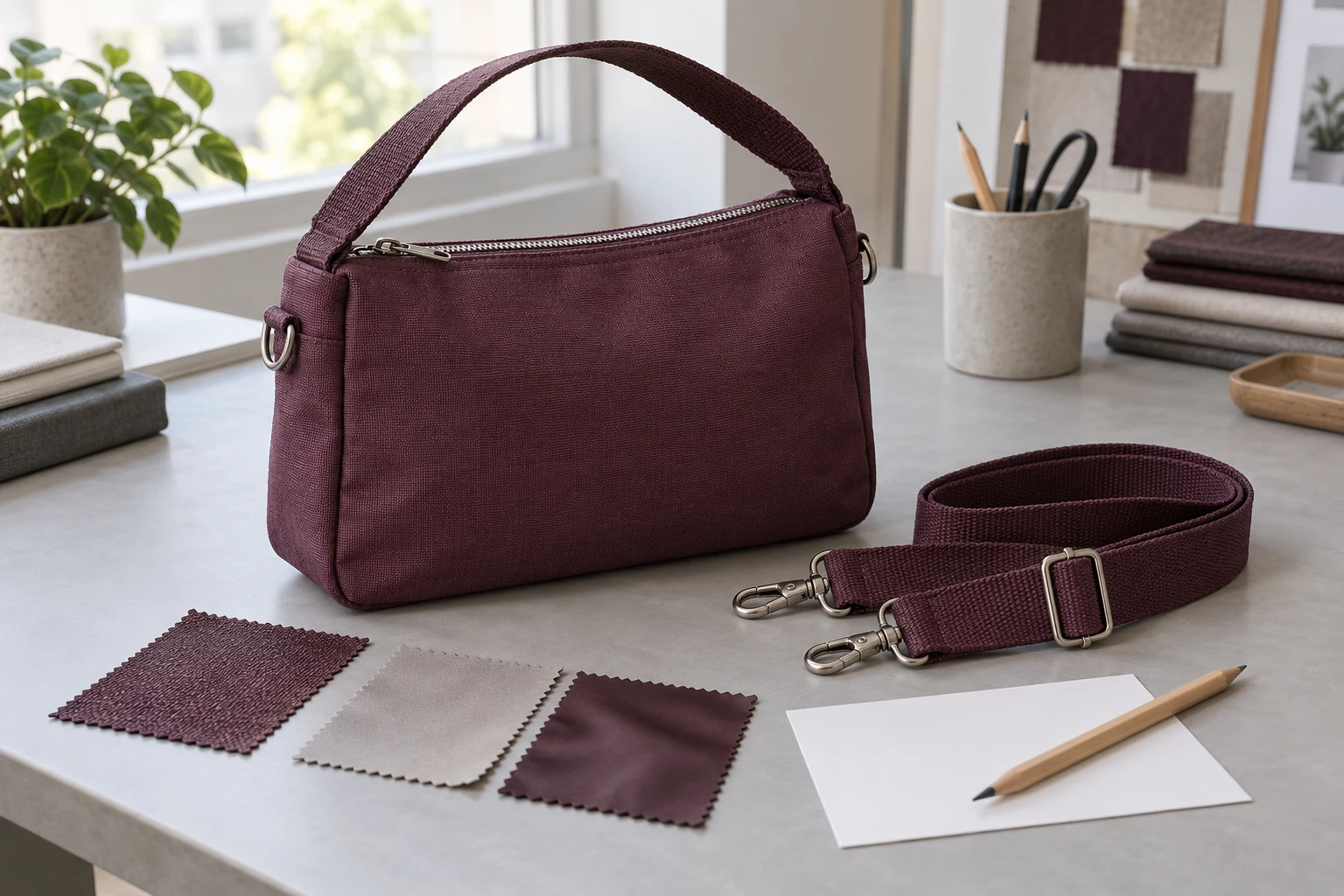
Custom bag sample approval should lock one physical sample to one written specification before bulk production is released. Check finished dimensions, actual materials, usable compartments, closures, carry points, branding and packing. Record every exception, identify the approved version and state whether further changes require another sample. An attractive prototype alone is not a complete production reference.
For brand owners and procurement teams, the practical question is simple: what exactly does “approved” allow the supplier to make? This guide explains how to review a preproduction bag sample, separate appearance decisions from performance evidence, and turn scattered feedback into a usable approval record.
By MAZ Outdoor · Buyer guide · October 5, 2026
Which sample are you approving?
Agree on the sample’s purpose before reviewing it. A shape prototype may use substitute fabric. A branding sample may show only decoration. A preproduction sample should represent the materials and construction intended for the order, with any remaining differences explicitly listed.
These stages should not share an ambiguous “OK” message. QIMA’s sample review service distinguishes prototype, fit, preproduction and shipment stages; its preproduction stage confirms technical files and specifications. That distinction is useful for bags even when your supplier uses different stage names.
| Sample purpose | Decision it supports | What still needs confirmation |
|---|---|---|
| Shape prototype | Proportions, opening and layout | Final materials, color and construction |
| Material or branding sample | Fabric finish or decoration direction | How the detail works on the complete bag |
| Preproduction sample | Release of the agreed product specification | Listed exceptions and separate test evidence |
| Production or shipment sample | Comparison with the approval reference | Batch inspection and packing requirements |
Ask the supplier to identify which components are final and which are temporary. If the sample has substitute lining or a different zipper, mark that limitation beside the affected specification. MAZ Outdoor’s sample development service provides a starting point for discussing appearance, function, materials and revision records together.
Freeze the materials before judging the finished bag
Build a short component list for the sample: outer fabric, lining, padding, reinforcement, webbing, thread, zipper, slider, buckles and decoration. Record supplier references where available, plus color, finish and placement. “Black nylon bag” leaves too many decisions open.
Keep physical swatches with the approval record. Ask whether the bulk material will come from the same approved specification and whether a proposed substitution needs written acceptance. For coated or backed materials, identify the complete material construction rather than approving only the visible face.
The custom bag fabric options page helps organize shell, lining and supporting layers. Use it to frame the discussion, then record the actual selection for your project. A material description does not establish finished-bag performance.
If a sample component is unavailable for production, resolve the replacement before release. Confirm whether it changes the hand feel, dimensions, appearance, function or quotation. Do not leave two competing material references in the final file.
Measure the sample and try the intended contents
A bag sample checklist needs measurement methods as well as target dimensions. Specify whether width is measured flat or with the bag shaped, whether height excludes handles, and where depth is taken. Agree tolerances for each important measurement; there is no single tolerance suitable for every bag design.
Check external measurements and the dimensions that matter to the user. A pocket can match its drawing yet have an opening too narrow for the intended item. Put the real contents, or accurate size substitutes, into the sample and close it normally. Record anything that catches, compresses or prevents access.
For a shoulder bag, review strap adjustment, carry-handle clearance and whether the bag sits as intended with its expected contents. For a tote, review the opening and reach into internal pockets. These are fit and usability observations, not a certified load rating.
Operate each closure and adjuster during the review. Check that the zipper travels through corners without trapping lining and that the intended strap passes through its buckle correctly. Record the agreed bag accessories and carry components as a matched system.
Approve color and branding on the actual material
Use a physical color reference when the match matters. Review shell, webbing, lining and decoration together under agreed lighting. Different components can appear coordinated in one setting and inconsistent in another.
X-Rite’s controlled color evaluation equipment uses multiple light sources to standardize visual assessment. For procurement, the useful principle is to record the viewing conditions and reference being compared. A phone photograph is helpful for locating an issue, but should not be the only basis for a critical color approval.
Check decoration size, placement, orientation, edge finish and legibility on the complete sample. Measure placement from a repeatable seam or panel edge. Review both the visible face and the reverse side where backing or stitching affects the lining.
If the method is still undecided, use the printing, embroidery and label comparison before signing off. Record the final artwork version and decoration method; approving the graphic file alone does not approve its finished application.
Inspect seams and attachment points closely
Look inside as well as outside. Check seam alignment, skipped stitches, loose threads, raw edges, lining caught in seams and uneven binding. Review the places where handles, straps and hardware connect to the bag, including any supporting layers that should be present.
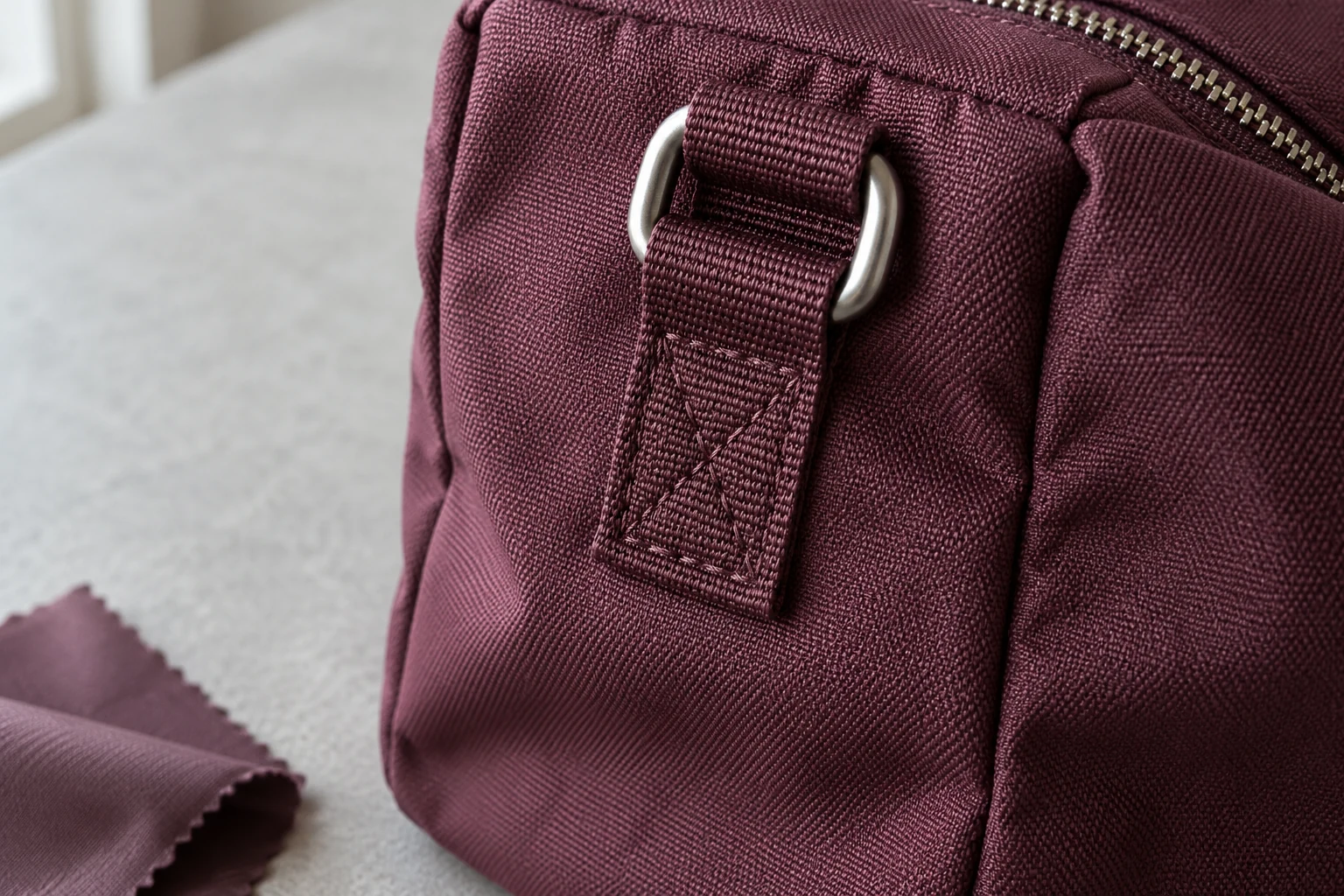
A neat stitch pattern is one appearance check. It does not establish the load capacity of the complete attachment. Ask how the chosen construction will be verified when the carrying requirement matters. Keep the agreed stitch and reinforcement details connected to the component specification.
Describe revisions with a location and a measurable instruction. For example, “move the inner pocket opening to the marked line on drawing revision C” is more actionable than “improve the pocket.” Use photographs with arrows for location, then write the required change separately.
Separate sample acceptance from performance evidence
Sample review can confirm observable details, but performance or material claims need appropriate evidence. If your brief includes a load requirement, abrasion resistance, colorfastness or water protection, agree the test method, configuration, acceptance criteria and responsible party before release.
SGS describes bag and accessory assessment as covering materials, components and product performance. Use that scope to ask a testing provider which checks fit your specific product and intended market. Do not treat the approval sample as a test report.
Where evidence is pending, state it in the approval status. An appearance approval should not silently become permission to print an unsupported performance claim on the packaging.
Create one approval packet and one clear release decision
Bring the physical sample and documents into one versioned sample approval record. Give the sample a unique reference, record the review date and identify who can approve the product. Keep a matching reference with the supplier where practical, and agree how it will be stored and used for later comparison.
- Sample identity: style, color, size, sample reference and revision.
- Product specification: dimensions, measurement methods, tolerances and component list.
- Visual references: material swatches, artwork version and placement details.
- Revision log: issue location, required change, responsible person and verification status.
- Evidence: agreed test requirements, available reports and unresolved items.
- Commercial handoff: accepted changes to price, quantity or timing, plus packing instructions.
Use explicit status language: approved for bulk production, approved for specified checks only, or revision required. If you permit a limited exception, describe exactly what it allows and how it will be confirmed. Request another physical sample when the change affects fit, construction or the carrying experience enough that documents cannot settle it.
Reconcile the release with the custom bag quotation brief so production follows the product that was quoted. Add the agreed packing checklist to the packet; product approval should not leave labels, inserts or carton instructions undefined.
Sample approval FAQ
Can photos replace a physical sample?
Photos can communicate shape and locate revisions. They cannot fully establish hand feel, usable access or carrying behavior. Decide which details require physical review and identify any limitations in a remote approval.
Does an approved sample guarantee the bulk order?
No. It provides a reference for the agreed product. Production checks and any planned batch inspection still need their own scope, acceptance criteria and comparison with that reference.
Should a small revision require a new sample?
It depends on the effect of the revision. A documented artwork file correction may be reviewable separately. A changed pocket opening, strap attachment or material combination may need physical confirmation before release.
Prepare the next sample review
For custom bag sample approval, send the current drawings, component choices, intended contents, artwork and a consolidated revision list. Identify what is final and what remains open. Share your project brief with MAZ Outdoor to discuss the next useful sample stage and the information needed before a production decision.