By MAZ Outdoor · Buyer guide · September 28, 2026
A useful custom bag quote starts with a clear brief: bag style, dimensions, materials, order quantity by color, logo method, packaging, destination and required delivery date. Ask the manufacturer to identify assumptions and separate sample development, bulk production and shipping. This makes competing quotations easier to compare and reduces the risk of approving a price for a different product than the one you intend to sell.
For brands, retailers and promotional buyers, the first decision is how much of the bag is already defined. Adapting an existing style and developing a new pattern require different discussions. This guide explains what to send, what to clarify about minimum order quantities, and what to approve before bulk production.
What should you include in a custom bag RFQ?
An RFQ, or request for quotation, should describe one shared specification. Send the same version to each supplier and ask them to flag substitutions explicitly. A photograph communicates appearance, but it does not define fabric composition, internal construction, finished measurements or performance.
| RFQ field | What to specify | What it helps clarify |
|---|---|---|
| Bag and intended use | Style, reference images, user and expected contents | Whether the proposed construction suits the job |
| Dimensions and structure | Width, height, depth, measurement method, pockets and closure | Pattern, material use and usable space |
| Materials | Outer fabric, lining, padding, trim and acceptable alternatives | What the quoted material actually includes |
| Quantity | Total pieces and split by style, size and color | Minimums for each variation |
| Branding | Artwork, method, dimensions, placement and colors | Setup requirements and application feasibility |
| Packaging | Individual packing, labels, inserts and carton requirements | Unit packing and shipment scope |
| Timing and destination | Delivery location and required arrival date | Production and transport planning |
| Acceptance requirements | Sample approval points, inspection criteria and required evidence | How the finished order will be evaluated |
If you have not chosen a format, review the MAZ Outdoor bag range and identify a starting style. Note which elements you want to retain and which you want to change. “Same silhouette, longer handles and an internal zipped pocket” is more useful than “make it premium.”
Should you choose an existing style or a new design?
Start with an existing style when its size, shape and function already meet your needs. Confirm which material, color, logo and packaging changes can be made without changing the pattern. This is a practical route for testing a collection when a distinctive new structure is not essential.
New development makes sense when the existing structure cannot perform the intended task. A compartment layout, a different opening or a particular carry system may need pattern work and sample revisions. For OEM production, supply the specifications you have already approved. For ODM development, identify the unresolved decisions and ask who will turn them into a production specification. Agree on deliverables rather than relying only on the OEM or ODM label.
The customization options provide a starting point for discussing materials, structure, branding and packaging together.
How does MOQ work for custom bags?
MOQ means minimum order quantity, but the number is incomplete unless its scope is stated. Ask whether it applies to the whole order, each style, each color or each material combination. A total of 300 bags split across three colors is not automatically equivalent to 300 bags in one color.
MAZ Outdoor lists a starting quantity of 100 pieces for suitable programs. This is a starting point for a project review, not a promise that every design or color combination is available at that quantity. Material sourcing, custom hardware and construction requirements can change the workable minimum. Ask for written confirmation against your exact brief.
If your proposed quantity is below the quoted minimum, ask which changes would make the order workable: using an available fabric, reducing color variations, retaining existing hardware or simplifying packaging. Evaluate whether the revised bag still fits your brand before accepting the alternative.
Which material and logo details affect the quote?
Specify the outer material and lining separately. Include the desired feel, structure and appearance, then ask the supplier to identify the proposed material and provide a sample or swatch for review. A broad description such as “nylon bag” leaves many purchasing decisions open. Review material customization before deciding which choices are essential and which are flexible.
For branding, provide artwork and the intended finished size. Ask whether the chosen application suits the surface and construction, and approve its placement on the sample. A logo shown in a digital mockup does not establish the appearance of the finished application.
If you need a claim such as waterproof or recycled content, include it as a requirement to substantiate. Ask what evidence covers the specific material or finished product. Do not treat a fabric description as proof of the completed bag’s performance, or assume evidence for one component covers the whole product.
What should you approve on a bag sample?
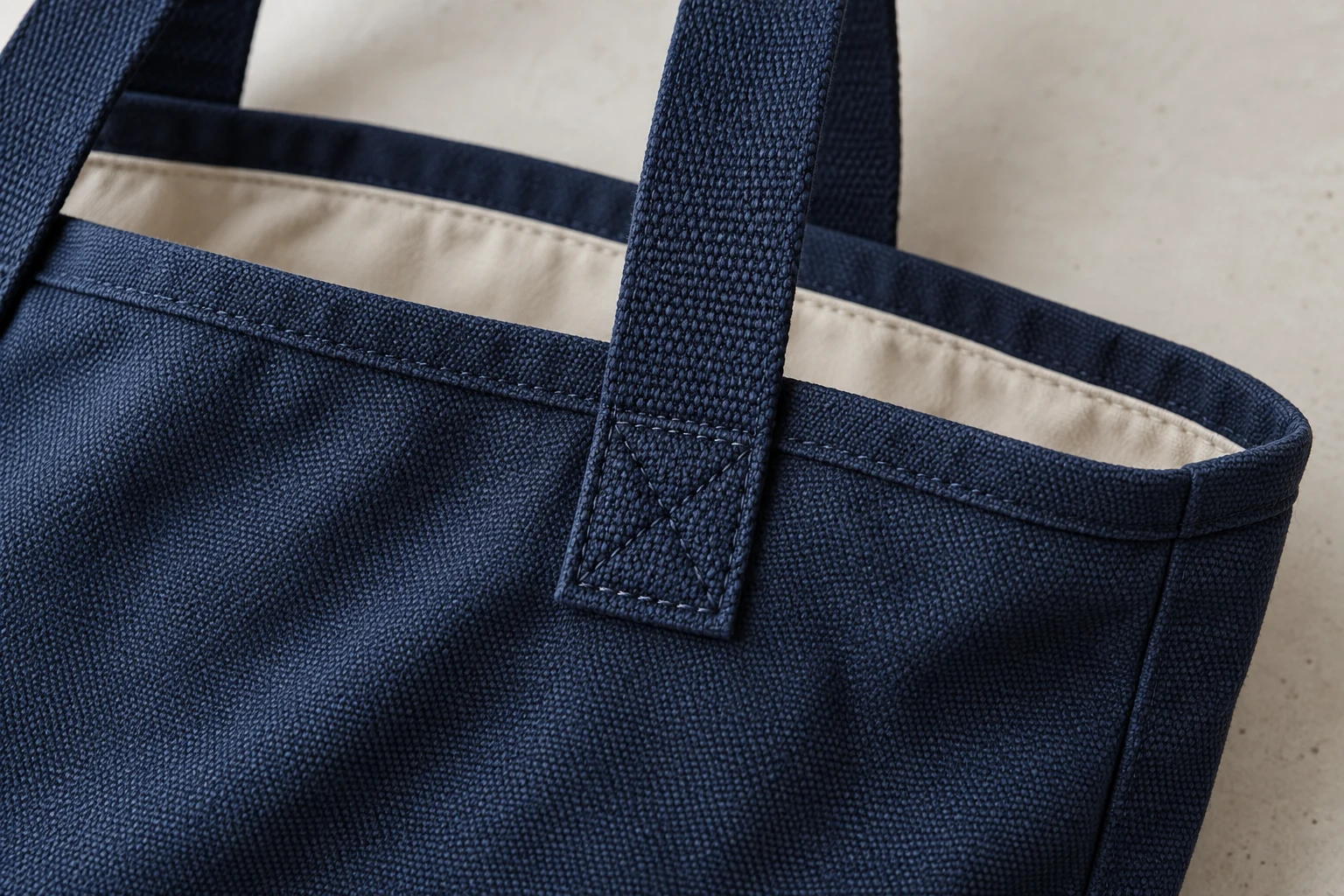
Sample approval should settle both appearance and function. Check the bag with the items it is meant to carry, record requested changes and identify the final approved version. Keep the sample approval record with the written specification so later discussions refer to the same construction.
- Check finished dimensions using an agreed measurement method.
- Review outer material, lining, color, padding and overall structure.
- Try the opening, closures, pockets, handles and straps in the intended use scenario.
- Confirm logo size, position, color and application appearance.
- Inspect seams, edge finishing, hardware and visible workmanship.
- Confirm labels, individual packaging and any outstanding substitutions.
Separate a development sample from the final production reference. If the approved sample uses a temporary component, record the replacement and decide how it will be approved before production. Agree on any required checks and acceptance criteria with the supplier; do not assume sample approval replaces inspection of the finished order.
Does lead time include sampling and shipping?
Ask for separate timing for development, sample revisions, material preparation, bulk production, inspection, packing and transport. Also ask what starts the production clock: for example, final sample approval, confirmed materials or another agreed milestone. A production duration is not the same as an arrival date.
MAZ Outdoor advertises a fastest lead time from 15 days. Treat that as a conditional starting point and obtain a schedule for your actual design, quantity and destination. Do not assume it includes sample development or international delivery. If the bags are for an event or launch, give the supplier the required arrival date and ask them to identify dependencies before you commit.
How can you compare supplier quotations fairly?
Compare quotes against the same specification revision, quantity split, packing requirements and delivery scope. Ask each supplier to list inclusions, exclusions, one-time charges and proposed alternatives. A lower unit price is hard to evaluate if one quote excludes packaging or specifies a different lining.
Keep a short comparison sheet covering unit price, sample charges, branding setup, packaging, inspection arrangements and transport scope. Mark unresolved items as questions rather than entering zero. Before approving an order, resolve those questions in writing and make sure the quotation matches the final approved sample and specification.
Frequently asked questions
Can I request a quote with only a photo?
Yes, a photo can start the discussion. Add approximate dimensions, intended use, quantity and destination, then ask which assumptions need confirmation. Treat an estimate based on incomplete details as provisional until materials and construction are agreed.
Can different colors share one MOQ?
That depends on the proposed materials and production plan. Ask for the minimum quantity per color and per style, as well as the total order minimum. Confirm the split before using the quoted unit price in your budget.
What if my specification changes after sample approval?
Issue a revised specification and ask the supplier to confirm its effect on price, timing and sampling. Identify which earlier approval is superseded. Avoid allowing a changed detail to remain only in an informal message.
Send a brief that leads to a useful quotation
For your next custom bag quote, send the reference style, dimensions, intended use, quantity by color, material preferences, logo artwork, packaging requirements, destination and required arrival date. Clearly label the decisions you have made and those where you need advice.
Send your bag project brief to MAZ Outdoor to discuss a suitable starting point. Request confirmation of MOQ, sample scope, quoted inclusions and production timing against that brief before placing the order.
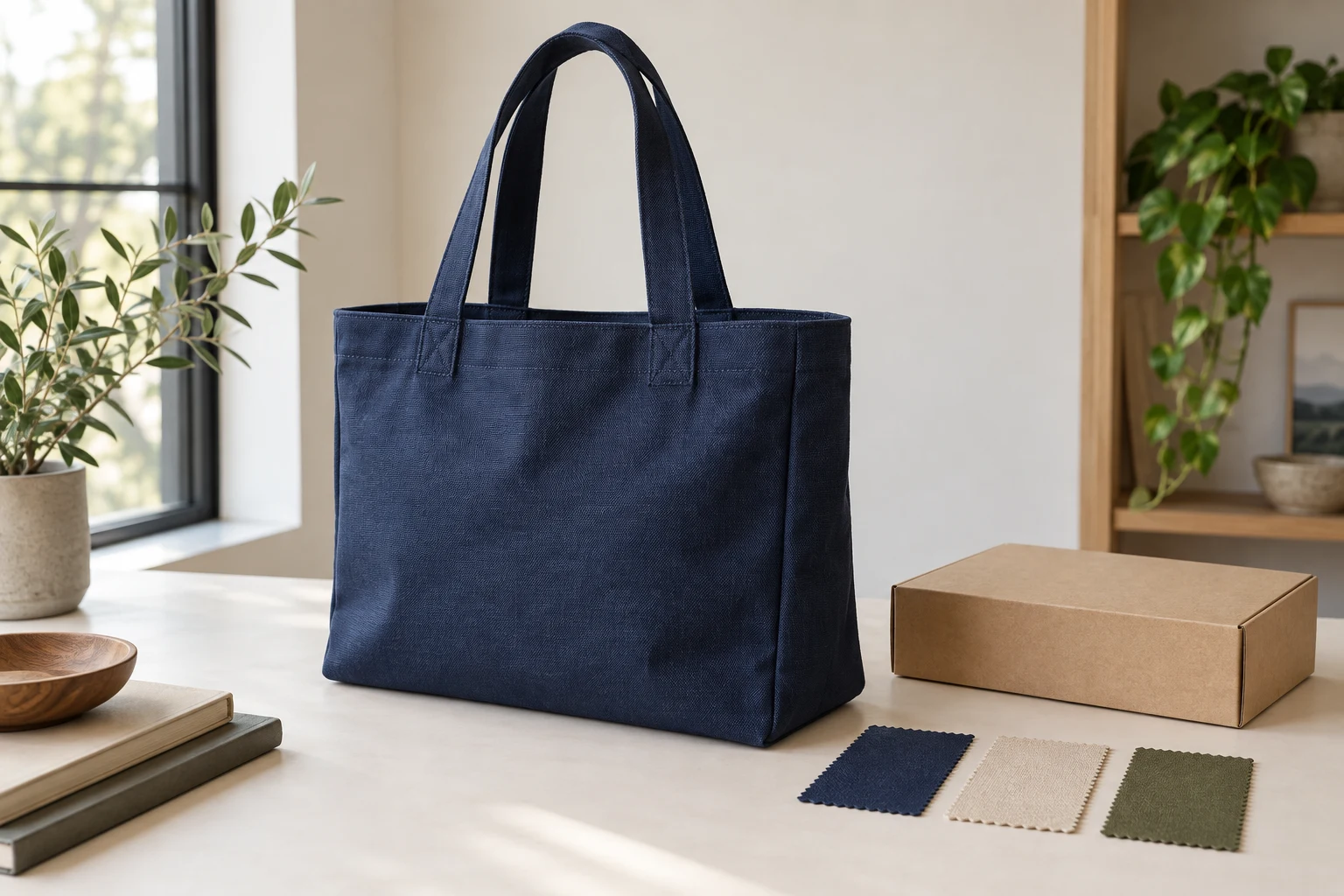
Images are AI-generated illustrations of generic bag construction and sourcing materials, not photographs of a specific MAZ Outdoor product or inspection.