Custom bag quality inspection needs a written product reference, a defined lot, a defect list and an agreed inspection plan. Check finished bags against the approved specification, record the findings, and decide who can release the shipment. If you use acceptance sampling, agree on the standard, edition, inspection level, AQL values and acceptance rules before the inspection begins.
A good preproduction sample establishes the intended product. A bulk inspection asks a different question: does the presented production lot meet the agreed requirements under the chosen inspection plan? Keeping those decisions separate helps buyers avoid approving a shipment on appearance alone.
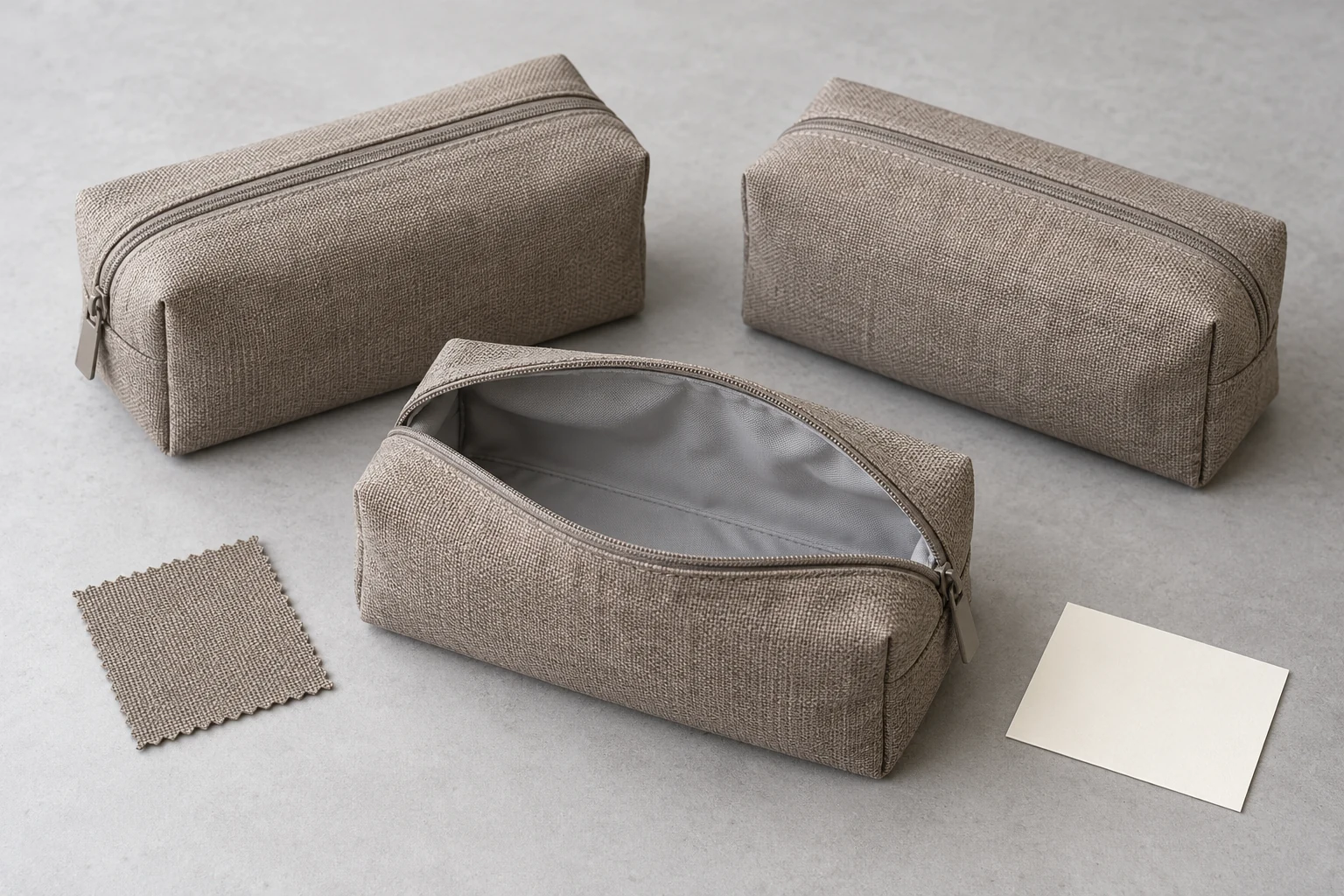
By MAZ Outdoor · Buyer guide · October 12, 2026. Images are AI-generated illustrations of generic products and sewing details, not actual production inspections or test evidence.
Start with the approved product reference
Give the inspector the current specification, approved sample reference, drawings and material or color references. Include the order breakdown by style, color and size. A report saying “matches sample” is difficult to interpret if the sample’s version or exceptions are unclear.
Turn important requirements into checkable statements. “Good stitching” does not identify the seam, construction or acceptable appearance. “Correct size” does not state the measurement points or tolerances. Define those details during development, then carry them into the inspection brief.
Use the preproduction sample approval checklist to establish the reference. Keep later approved changes attached to the same revision record. If a material substitution or layout change has not been resolved, an inspector should record the discrepancy rather than assume it is acceptable.
Define the lot and the inspection scope
A lot is the group of units presented for the acceptance decision. Agree on its boundaries, including product references and quantities. Decide whether different styles, colors or production batches will be evaluated separately. Do not silently combine unlike products just to simplify the sample selection.
State when the goods must be available and what condition they should be in. The brief should identify how many units are completed, which cartons can be accessed, and whether the packing configuration is final. Findings on an incomplete or inaccessible lot need those limitations in the report.
Separate visual and functional checks from laboratory testing or specific performance checks. An inspector opening pockets and operating zippers is not establishing abrasion resistance, chemical compliance or impact protection. Identify any required reports separately, including the material or product configuration they cover.
Write a defect list before inspectors count findings
Defect classification should reflect the intended use, agreed specification and consequences of failure. Critical, major and minor categories are useful only when both parties understand what belongs in each one. The examples below are starting points for discussion, not universal classifications.
| Category | Question to resolve | Illustrative bag finding |
|---|---|---|
| Critical | Could the condition create an unacceptable safety risk? | A sharp exposed metal component; assess the actual product and use |
| Major | Does the condition impair intended use or fail an important requirement? | A main zipper that cannot close, or a required compartment missing |
| Minor | Is the condition a limited appearance or finish issue under the agreed criteria? | A loose thread tail where the seam remains intact; severity depends on the location and brief |
Add photographs or annotated drawings showing the location and acceptance boundary. The same mark may matter differently on a visible front panel and an internal seam allowance. Define whether the plan counts nonconforming units or individual nonconformities, and how multiple findings on one bag are recorded.
Do not assume a low acceptance number makes a safety concern disappear. Agree on escalation and release rules for serious findings, along with any separate controls the product requires. No finite sample can prove that every uninspected unit is free of defects.

Use AQL as part of a complete sampling plan
AQL means acceptance quality limit. It is an input to an acceptance-sampling scheme, not a promise that the actual defect percentage in every delivered lot will stay below that number. A sample-based acceptance decision contains uncertainty about the units that were not examined.
ISO 2859-1:2026 defines AQL-indexed sampling schemes for lot-by-lot inspection by attributes. The published 2026 edition replaces the earlier 1999 edition and its amendments. Name the agreed edition in the inspection instructions rather than referring vaguely to “the AQL standard.”
The American Society for Quality describes ANSI/ASQ Z1.4 as an acceptance-sampling system used with switching rules on a continuing stream of lots. A sampling system includes more than a single table lookup. Ask the inspection provider to explain which standard and rules apply to your purchasing arrangement.
Record the lot size, inspection level, inspection severity, sample size, agreed AQL for each applicable category, and acceptance and rejection numbers. Have the provider derive those values from the selected plan. A statement such as “AQL passed” is incomplete without the plan inputs and observed counts.
Avoid selecting a sample size or common AQL value simply because another buyer uses it. Choose the plan around the product, order history and consequences of defects, with qualified quality support where needed. Sampling does not replace process control, accurate specifications or the agreed treatment of nonconforming goods.
Build a custom bag inspection checklist around use
Organize the checklist so an inspector can follow the same sequence on each selected unit. Make the acceptance criteria available beside the checks, especially for measurements and appearance judgments.
- Identity and assortment: compare style, color, size, branding and quantities with the order and packing records.
- Measurements: use agreed points and methods for finished dimensions, strap adjustment and essential compartment openings.
- Materials and finish: check the specified surface, lining, visible color differences, stains and agreed appearance limits.
- Construction: inspect seam completion, binding, reinforcement placement, pocket attachment and exposed edges.
- Function: operate closures, adjust straps, check pocket access and use representative contents where the brief calls for a fit check.
- Presentation and packing: review labels, individual protection, carton assortment and the agreed packed condition.
For load or other performance checks, define the method, sample requirements and pass criteria separately. Do not introduce an improvised weight or test duration during the visit and treat it as a validated product rating. Record whether a result comes from the visual inspection, a functional check or a separate test report.
The bag packaging checklist helps specify the packing details that receiving teams need. Inspectors should know which presentation requirements apply before they open or repack the selected units.
What should the inspection report show?
A usable report identifies the order, lot, inspection date, product revision, sampling plan and selected units. It records actual measurements and findings, with photographs that show both the detail and its location on the bag. Separate category counts from general observations.
Also record checks that could not be completed, unavailable references and any deviation from the agreed plan. A qualified conclusion should explain what was examined and what remains unresolved. The report’s scope matters as much as its overall result.
Agree on the response to a failed or inconclusive inspection before it happens. Possible steps include identifying affected goods, sorting, rework, replacement and another inspection under the agreed procedure. State who approves the corrective action and who authorizes shipment. A successful repair on one photographed unit does not resolve the rest of the lot automatically.
Buyer questions about bulk bag inspection
Does a passed inspection mean every bag is defect-free?
No. Acceptance sampling evaluates a lot using selected units and agreed decision rules. It does not inspect every bag or guarantee the condition of every unexamined unit.
Can the approved sample replace a bulk inspection?
No. The sample defines the target product, while the inspection examines the presented production lot. Keep both records connected, and specify the verification work required for your order.
Should all custom bags use the same AQL?
No single value fits every product or buyer. Agree on the classifications and sampling plan with the supplier and inspection provider. Consider the intended use and the consequences of each type of defect.
Agree on inspection requirements when requesting a quote
For a useful custom bag quality inspection brief, provide the product revision, order quantities and assortment, measurement tolerances, defect examples, required checks, sampling approach and reporting format. Identify any separate performance evidence and the person authorized to release the shipment.
Use our custom bag quote checklist to include that work in the commercial discussion. Send the requirements through the MAZ Outdoor project brief so the quote, approved sample and final inspection refer to the same product and expectations.