A complete buyer’s guide to custom bag mold tooling. Learn which bag accessories require custom molds, understand mold cost structures, lead times, modification rules, and mold ownership rights, plus practical tips to reduce new product development expenses.
By MAZ Outdoor · Buyer guide · October 31, 2026
Most custom bag development budget overruns and schedule delays stem from unclear mold tooling rules. Many first-time brand buyers assume all customized accessories can be modified from stock parts, unaware that personalized plastic bases, unique buckle shapes, and branded hardware require independent custom mold development. Vague agreements on mold fees, modification charges, and ownership rights often lead to hidden costs and post-production disputes.
Mold tooling is the core fixed investment for personalized custom bag projects. A clear understanding of tooling scope, cost composition, adjustment limits, and ownership rules helps buyers control development budgets, shorten lead times, and avoid unnecessary re-tooling losses. This guide standardizes full-process mold tooling specifications for custom bag accessories and provides cost-saving sourcing strategies for new product development.
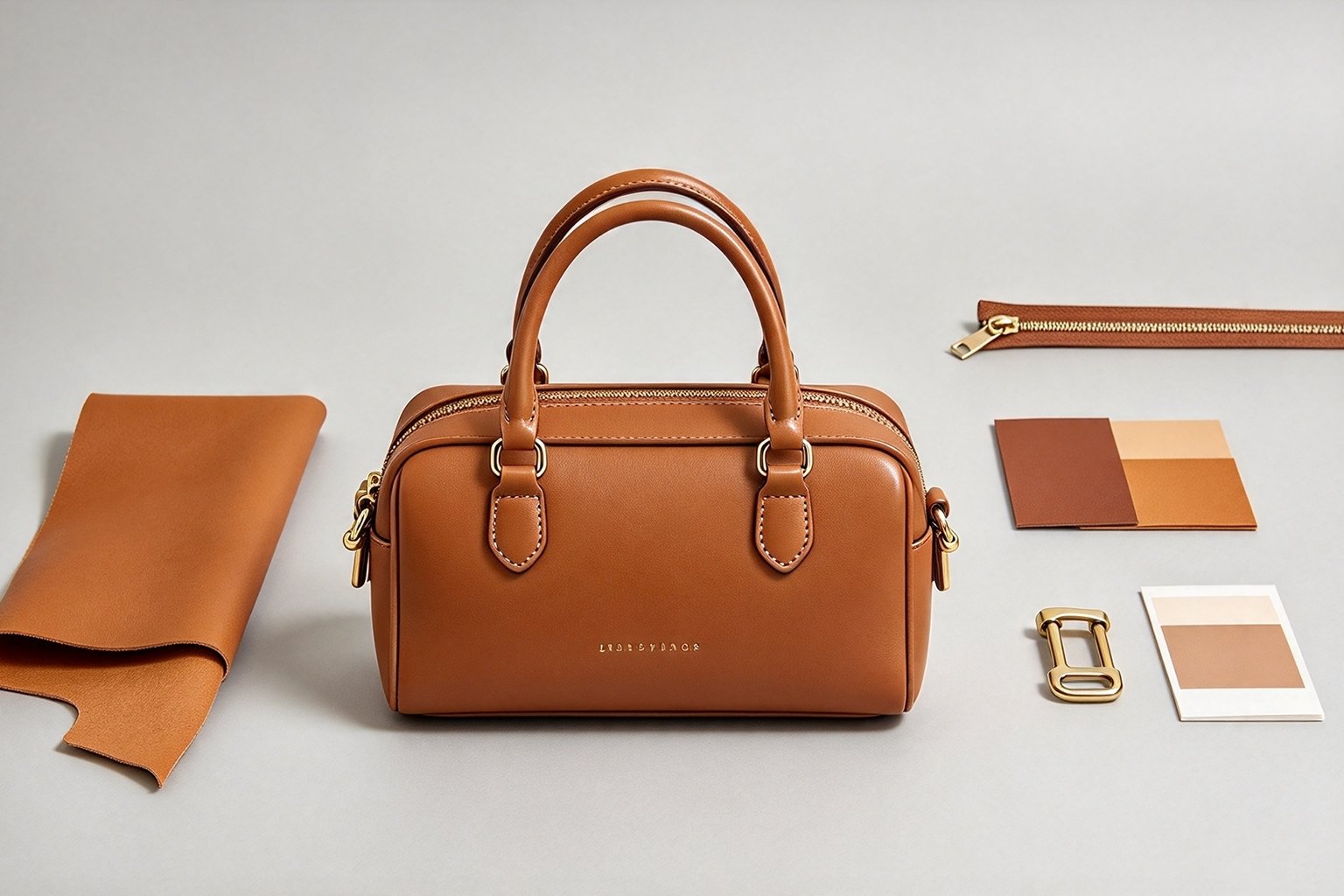
All images in this guide are AI-generated generic illustrations of mold structures and accessory tooling workflows, not photos of physical molds or mass production tooling standards.
Which Custom Bag Accessories Require Custom Mold Tooling?
Standard off-the-shelf bag accessories use universal public molds with fixed shapes, sizes, and structures, supporting zero-tooling small-batch orders. Any accessory that involves exclusive shape adjustment, personalized branding, or structural customization requires dedicated custom mold development. The three most common tooling-dependent accessories cover most custom bag personalized demands.
1. Custom Plastic Buckles & Fittings
Universal plastic buckles (standard release buckles, ladder locks, strap adjusters) are public mold accessories with no tooling fees. Custom plastic parts require new molds if buyers need exclusive outlines, non-standard sizes, personalized radian adjustments, or hollow-out branding designs. These customized plastic components cannot be produced using existing public mold cavities and require independent tooling development.
2. Custom Plastic Base & Support Parts
Bag bottom bases, internal support brackets, and fixed positioning plastic frames are highly scenario-specific. Standard public molds only match conventional bag sizes and regular structures. Customized thickness, contour radian, anti-slip groove design, and exclusive sizing for specialized bags all require custom mold opening to meet structural assembly requirements.
3. Exclusive Custom Hardware Components
Generic hardware such as standard zippers, ordinary D-rings, and common hook buckles are stock public mold parts. Custom logo metal nameplates, engraved zipper pulls, shaped metal buckles, and personalized rivet fittings require independent die molds. As core branded accessories distinguishing custom products, these hardware molds directly determine the uniqueness of finished bag styles, consistent with our custom bag logo and branding specification standards.
Custom Mold Tooling Cost Structure & Standard Lead Time
Custom mold fees are one-time fixed development costs, not per-unit production fees. Many buyers misunderstand mold charges as repetitive bulk production costs, resulting in budget miscalculations. Complete custom tooling expenses include three core components, with fixed industry-standard lead times for different accessory types.
| Tooling Item | Cost Composition Details | Standard Lead Time |
|---|---|---|
| Mold Development Fee | CNC machining cost, mold steel material cost, cavity opening labor cost, and technical debugging fee | 7–10 working days for simple structures; 10–15 working days for complex multi-cavity molds |
| Sample Trial Production Fee | Raw material consumption, machine trial running loss, manual inspection and revision cost | 2–3 working days after mold completion for sample confirmation |
| Initial Debugging Fee | Fine-tuning for assembly fit, surface polishing, and structural calibration to match bag body installation | Included in primary tooling, no extra charge for first-time debugging |
All mold tooling fees are charged one-time only. No repeated mold costs are required for subsequent bulk reorders, which is the core economic advantage of custom mold development for long-term brand iteration.
Mold Modification Rules: Minor Adjustments vs. Full Re-Molding
Post-tooling design adjustments are divided into free minor modifications and charged major revisions, and partial adjustments cannot replace full mold reopening. Clarifying modification boundaries in advance avoids unexpected incremental costs during sample approval, referring to our pre-production sample approval checklist.
1. Free Minor Mold Adjustments
Surface polishing, slight burr trimming, tiny radian fine-tuning, and minor logo carving depth optimization are classified as free minor adjustments. These modifications do not change the original mold cavity structure and do not require repeated machining, included in the initial tooling service with zero additional fees.
2. Charged Major Mold Revisions
Adjustments involving cavity size changes, outline shape modification, structural hole position shifting, and thickness alteration require secondary machining. Such revisions consume additional labor and mold loss, and factories charge proportional modification fees based on adjustment complexity.
3. Full Mold Reopening (Non-Adjustable Scenarios)
If the buyer’s revised design changes the core structural logic or overall dimension proportion beyond the mold’s adjustable range, minor revisions are invalid, and full new mold opening is mandatory. In this case, new complete tooling fees and lead times apply, which is the main cause of delayed project schedules and overspent budgets.
Core Buyer Concern: Custom Mold Ownership Rights
Mold ownership is the most critical and easily overlooked clause in custom accessory tooling cooperation. Unclear ownership agreements will restrict subsequent reorder flexibility and brand independence.
Buyer-Paid Custom Molds: All tooling fully funded by the buyer belongs exclusively to the buyer. Factories only have usage rights for production services and cannot reuse, resell, or lend the custom mold to third-party brands. Buyers have the right to take back the mold or authorize exclusive production.
Factory-Shared Public Molds: For modified public molds with partial buyer optimization but full factory tooling investment, ownership remains with the factory. Buyers only obtain priority usage rights and cannot exclusively occupy or transfer the molds.
Co-Invested Molds: For jointly funded tooling projects, usage scope and ownership need to be clearly defined in advance in the cooperation agreement to avoid subsequent right disputes.
All custom mold ownership terms must be confirmed before tooling initiation and recorded in the project brief to eliminate ambiguous post-production disputes.
Cost-Saving Sourcing Strategy: Prioritize Existing Public Molds
Independent custom mold tooling inevitably generates one-time fixed costs and extended development cycles. For new product trial sales and small-batch custom projects, prioritizing qualified existing public molds is the most effective way to reduce development costs and shorten lead times, aligning with our small-batch customization cost control logic in the custom bag quote checklist.
- Reuse Standard Public Mold Accessories: Select factory existing public mold buckles, bases, and hardware for basic structural accessories to eliminate tooling fees and shorten development cycles
- Reserve Customization for Non-Structural Details: Retain public mold structures, and realize brand differentiation through logo printing, surface electroplating, and color customization
- Batch Tooling for Long-Term Projects: For iterative brand products, concentrate accessory customization to reduce repeated mold opening and optimize long-term comprehensive costs
- Verify Mold Compatibility in Advance: Confirm public mold accessory assembly adaptability with bag body structures at the sample stage to avoid secondary modification costs
FAQ: Common Mold Tooling Questions for Custom Bag Buyers
Do all custom bag hardware accessories require new molds? No. Standard-sized, non-customized hardware and plastic fittings use existing public molds with zero tooling fees. Only exclusive shapes, personalized structures, and custom-sized accessories require independent mold development.
Will minor mold adjustments generate extra charges? Fine polishing, deburring, and tiny surface optimization are free. Structural and dimensional modifications that require secondary machining will incur proportional revision fees based on complexity.
Can buyers take away custom molds after production? Yes. Buyer-funded exclusive molds belong to the customer. Buyers can choose to store molds in the factory for subsequent reorders or arrange mold retrieval as required.
Is public mold reuse sacrificing product uniqueness? Not necessarily. Brand differentiation can be achieved through surface finishing, custom logos, and color matching. Public mold reuse effectively reduces trial-production risks and development costs for new projects.
Key Takeaway
Custom mold tooling is only required for personalized plastic and hardware accessories with exclusive structural or dimensional demands. Buyers need to distinguish free minor adjustments, charged revisions, and full re-molding scenarios, and clarify mold ownership clauses before project initiation. For most new custom bag developments, prioritizing existing public molds is the most efficient strategy to cut fixed tooling costs and stabilize project lead times.
Professional Custom Mold Tooling Support
We support custom hardware and plastic accessory tooling development, and provide abundant existing public mold resources to help brands reduce new product development costs and shorten time-to-market. Talk to our team to confirm your accessory customization scheme and mold solution.