A practical custom bag buyer guide covering post-production design modification rules. Learn the difference between minor tweaks and major structural changes, how late revisions raise hidden costs, cause lead time delays, and the standardized workflow to manage order changes without disputes.
By MAZ Outdoor · Buyer guide · November 04, 2026
Most custom bag sourcing delays and budget overruns stem from unregulated post-PP (pre-production) sample design changes. Many brand buyers treat PP samples as tentative drafts and assume minor or mid-stage adjustments can be implemented freely during mass production. In professional OEM/ODM manufacturing, the signed PP sample serves as the final locked technical baseline for all bulk production processes, materials, and workmanship standards. Any design alteration after formal approval will trigger irreversible production losses, extra labor overhead, and rescheduling delays.
Understanding post-PP change classification, cost evaluation logic, and formal revision workflows is critical for controlling custom project budgets and delivery timelines. This guide systematically breaks down the consequences of late-stage design changes, clarifies change grading standards, and shares industry-standard best practices for custom bag project management.
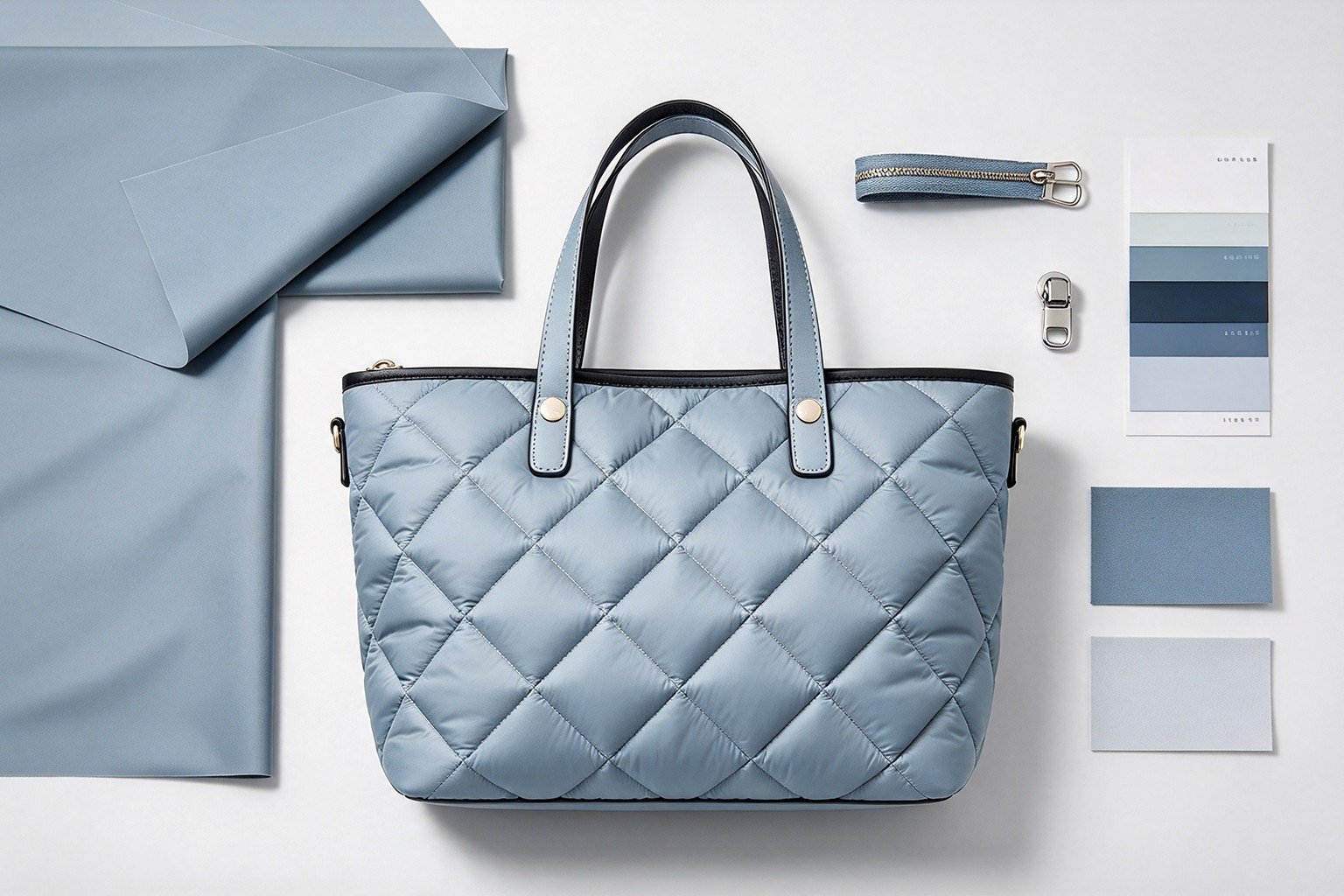
All visuals in this article are generic AI-generated production workflow illustrations, not on-site factory production records or customized order samples.
Why Post-PP Modifications Disrupt Bulk Production Stability
Once a PP sample is reviewed, confirmed, and signed off, the factory completes full pre-production preparation work. This includes bulk material sourcing, custom accessory procurement, production line parameter calibration, stitching standard confirmation, workshop scheduling, and QC rule formulation. All technical details in the tech pack are fully solidified to form a unified execution standard for workers, technicians, and quality inspectors.
Unlike prototype-stage adjustments with zero sunk cost, post-PP design changes invalidate completed pre-production work. Even subtle adjustments can break matched material specifications, assembly logic, and process parameters, resulting in material waste, repeated debugging, and lowered production efficiency. For standardized PP sample verification rules, refer to our dedicated custom bag pre-production sample approval checklist.
Post-PP Change Classification: Minor Tweaks vs. Major Structural Revisions
Not all late-stage modifications generate equal risks and costs. Factories classify adjustments into two core categories based on whether they alter locked production processes, helping buyers accurately assess budget and schedule impacts.
| Change Type | Common Adjustment Scenarios | Core Production Impact | Official Processing Standard |
|---|---|---|---|
| Minor Non-Structural Tweaks | Slight logo print position fine-tuning, subtle color brightness correction, minor thread color matching adjustment, surface pattern tiny modification, non-functional detail optimization | No material replacement or process overhaul; negligible sunk loss | No full resampling required; on-site calibration + mandatory written confirmation |
| Major Structural Revisions | Overall dimension adjustment, internal compartment structure modification, strap/webbing connection changes, zipper position shifting, fabric/material replacement, custom hardware update, stitching and reinforcement process adjustment | Invalidates pre-purchased materials and locked production processes; substantial sunk cost and efficiency loss | Mandatory re-sampling, full tech pack update, production line re-debugging; definite cost increase and lead time extension |
The core judgment standard is clear: any change that affects product structure, material configuration, assembly logic or production craftsmanship counts as a major revision. Pure visual, non-functional fine-tuning is defined as a minor tweak.
How Late Changes Generate Extra Costs & Lead Time Delays
Post-PP modifications cannot be implemented at zero cost. All adjustments create quantifiable hidden losses, which are the main causes of custom bag project budget overruns and delivery delays.
1. Sunk Material Waste Costs
After PP confirmation, factories complete bulk fabric cutting, accessory matching, and customized hardware procurement. Structural or material changes render existing materials and semi-finished products unusable. For custom hardware and accessories with fixed MOQ limits, scrapped parts cannot be reused for other orders, resulting in one-time sunk losses. You can learn more about accessory sourcing constraints in our custom bag MOQ variation guide.
2. Production Line Changeover & Debugging Overhead
Mass production lines operate with fixed stitching density, seam allowance, assembly sequences and machine parameters after PP locking. Major revisions require full line readjustment, process rearrangement and worker skill re-adaptation. Frequent changeovers reduce continuous production efficiency and significantly raise unit labor costs.
3. Repeated Sampling & QC Management Costs
Major design changes require secondary prototype production, structural testing and QC standard re-verification. The repeated technical review and quality inspection process consumes extra management and labor resources that do not exist in standardized locked production.
4. Production Rescheduling & Lead Time Delay
Factory production schedules are fixed based on confirmed PP orders. Post-PP revisions interrupt original production arrangements, forcing the order to be reinserted into the production queue and losing original scheduling priority. This directly extends overall project lead time, with delay duration determined by change complexity and workshop order density.
Standard Post-PP Change Workflow (Avoid Quality & Payment Disputes)
Verbal temporary modifications are the leading cause of batch quality inconsistencies and order disputes. All post-PP adjustments must follow standardized written processes to ensure full traceability and unified execution standards.
1. Formal Written Change Application & Dual Confirmation
Buyers must submit all modification demands in written form, with clear revised content, adjustment scope, and expected effect. The factory team conducts feasibility verification, sorts out incremental costs and delayed lead times, and issues an official change confirmation document. Production adjustments can only proceed after dual-party signed confirmation.
2. Full Synchronous Update of Technical Documents
Once the modification is confirmed, all production files must be updated synchronously, including tech packs, construction drawings, material specification lists, stitching standards, and QC inspection guidelines. Old version documents are completely replaced to ensure designers, technicians, workshop workers and inspectors implement the latest unified standards.
Sourcing Best Practice: Lock 100% Details in the PP Sample Stage
The most cost-effective and risk-control strategy for custom bag projects is to eliminate post-PP modifications entirely. The PP sample stage is the final low-loss window for design adjustment. Once bulk production starts, all revisions will generate unnecessary losses.
Before signing off on PP samples, buyers must fully verify and lock all core details: external dimensions, internal compartment layout, fabric and material specifications, logo style and position, hardware configuration, stitching reinforcement standards, and color matching effects. Avoid ambiguous reserved terms such as “minor adjustment later” or “tentative confirmation”. Full detail locking maximizes project stability and controls overall costs. You can use our custom bag quote checklist for comprehensive demand sorting and verification.
FAQ: Common Post-PP Design Change Questions
Are minor visual tweaks free after PP sample approval? Simple non-structural fine-tuning usually waives additional fees, but formal written confirmation is still mandatory. Multiple repeated minor adjustments will accumulate debugging labor costs and may incur extra charges.
Is major structural revision allowed during mass production? It is technically feasible but strongly not recommended. Major changes lead to massive material waste, production line rescheduling, obvious lead time delays and higher unit costs, seriously affecting project budgets and delivery plans.
Why do factories reject verbal on-site modifications? Verbal adjustments lack standardization and traceability. Once batch quality problems occur, responsibility cannot be defined. Standard written workflows and document updates ensure production consistency and avoid post-order disputes.
How to completely avoid late-stage production changes? Confirm all functional and structural requirements in the pre-sample stage, and conduct full-dimensional verification on PP samples. Lock all technical details before approval to eliminate the need for bulk-stage revisions.
Key Takeaway
The signed PP pre-production sample is the official fixed baseline for custom bag bulk manufacturing. All post-approval design changes bring inherent risks including material waste, repeated debugging labor, extra management costs and lead time delays. Minor tweaks require standardized written confirmation, while major structural revisions will inevitably increase costs and delay delivery. Locking all design and technical details during the PP stage and following formal change workflows are the core best practices for stable custom bag project delivery.
Professional Custom Bag Order Change Management
We manage order changes clearly to avoid delays and quality inconsistencies for custom bag projects. Our team standardizes all revision processes, updates technical documents in real time, and provides transparent cost and lead time assessments for every adjustment. Contact us to discuss adjustments to your custom bag project.