A professional buyer’s guide to post-PP-sample design changes in custom bag orders. Learn the difference between minor tweaks and major structural revisions, how production changes raise costs and delay lead times, and how standardized change locking prevents bulk order disputes.
By MAZ Outdoor · Buyer guide · November 06, 2026
A common misconception among custom bag buyers is that design adjustments can be freely made after PP (pre-production) sample confirmation. Many brands treat PP samples as a preliminary reference rather than a locked production standard, assuming late-stage tweaks only generate minor adjustments with no extra cost or schedule impact. In actual factory operations, the PP sample serves as the final technical baseline for all bulk production parameters. Any design modification after PP approval triggers process resets, material waste, line re-calibration, and inevitable project losses.
Unregulated post-PP changes are the top cause of budget overruns, delivery delays, and quality inconsistencies in custom bag OEM/ODM projects. Understanding change classification, cost impact, formal revision workflows, and buyer best practices helps stabilize project quality, control budgets, and avoid unnecessary production disputes.
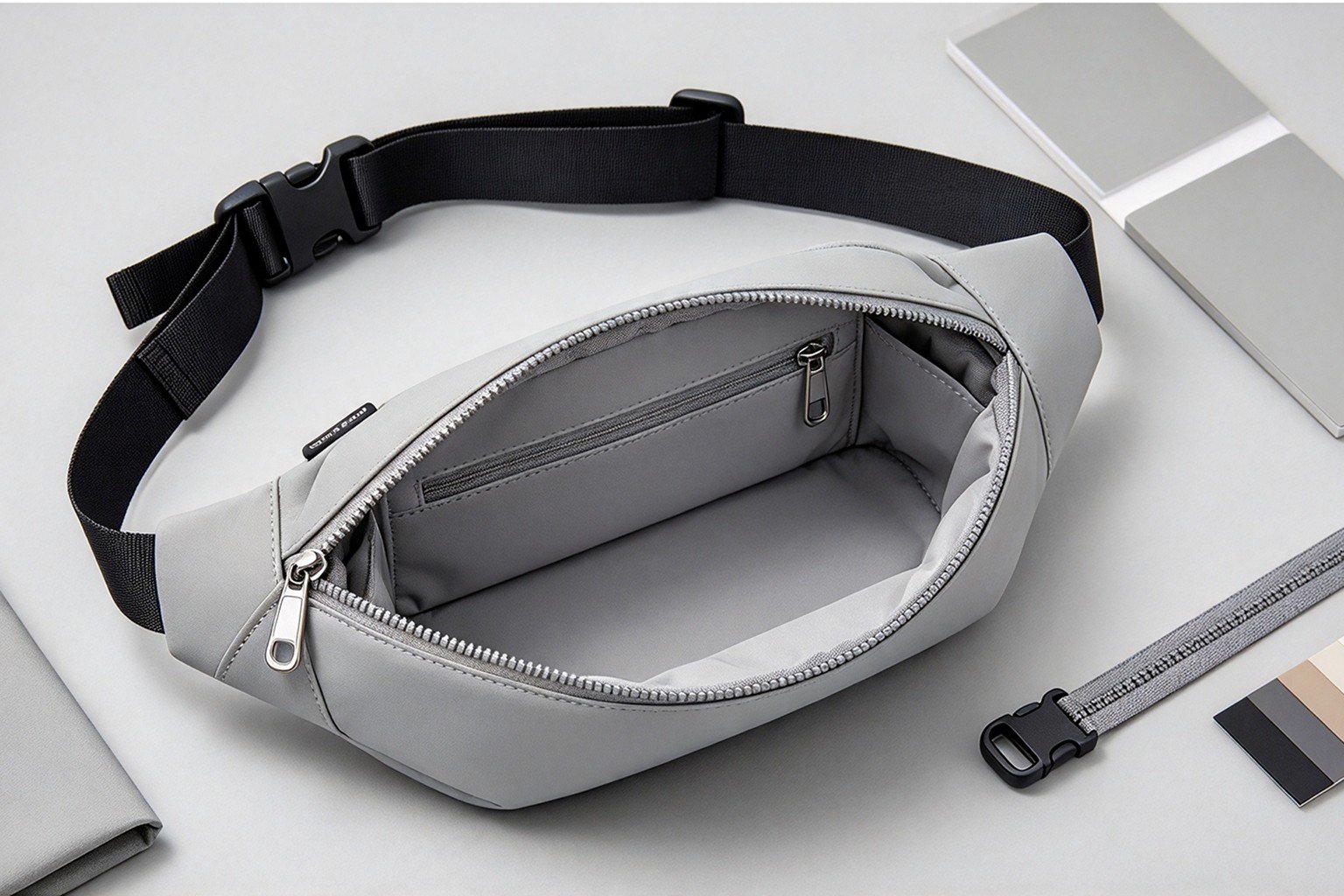
All images in this guide are AI-generated generic illustrations of production revision workflows, not official factory production standards or real-order adjustment records.
Why Post-PP Design Changes Risk Bulk Order Stability
Once the PP sample is signed and approved, the factory completes full pre-production preparation: material procurement, accessory matching, stitch parameter calibration, process scheduling, and assembly line debugging. All technical details in the tech pack are fully locked to form a unified production standard for workers, QC teams, and workshop equipment.
Any subsequent design change breaks the finalized production baseline. Unlike sample-stage adjustments that only involve individual hand-made prototypes, bulk-stage modifications require adjusting mass production processes, rematching materials, and re-verifying workmanship standards. Even small visual tweaks may trigger chain reactions in assembly, stitching, and structural compatibility, leading to hidden quality risks and incremental costs. For standardized PP sample verification rules, refer to our custom bag pre-production sample approval checklist.
Custom Bag Change Classification: Minor Tweaks vs. Major Revisions
Not all post-PP modifications carry the same risk and cost. Factories distinguish adjustment fees, lead time extensions, and re-approval processes based on change severity. Buyers must clarify change classification before submitting revisions to predict project impacts accurately.
| Change Classification | Typical Adjustment Scenarios | Production Impact Level | Processing Rules |
|---|---|---|---|
| Minor Tweaks | Slight logo printing position fine-tuning, tiny color brightness correction, minor thread color matching adjustment, non-structural surface detail optimization | Low impact; no process or material overhaul required | No full resampling required; partial on-site calibration + written confirmation |
| Major Structural Revisions | Overall dimension adjustment, internal compartment structure changes, strap/webbing connection modification, zipper position shifting, material replacement, hardware style update, stitching process adjustment | High impact; invalidates existing process settings and prepared materials | Mandatory re-sampling, tech pack update, and full process re-debugging; definite cost increase and lead time delay |
The core judging standard for change classification is simple: whether the adjustment changes the locked production process, material configuration, or structural assembly logic. Pure visual fine-tuning belongs to minor tweaks, while any process-related modification is defined as a major revision.
How Post-PP Changes Generate Extra Costs & Lead Time Delays
Every bulk-stage modification produces quantifiable incremental losses. Unlike zero-cost sample-stage adjustments, post-approval changes involve sunk costs of completed pre-production preparation and repeated labor overhead.
1. Direct Material Waste Cost
After PP confirmation, factories complete bulk material ordering, cutting preparation, and accessory matching. Structural or material changes render pre-purchased fabrics, customized hardware, and pre-cut blanks unusable. For custom accessories with fixed MOQ requirements, scrapped materials cannot be reused in other orders, resulting in direct sunk losses. Learn more about material sourcing limits in our custom bag MOQ and sourcing guide.
2. Production Line Changeover & Debugging Cost
Bulk production line parameters including stitch density, seam allowance, and assembly procedures are fully calibrated after PP locking. Structural revisions require full machine readjustment, process rearrangement, and worker re-adaptation. Frequent line changes reduce production efficiency and raise unit labor costs, consistent with the small-batch cost logic covered in our bag stitching and seam standard guide.
3. Re-Sampling & QC Verification Overhead
Major revisions require new prototype sampling, repeated performance verification, and secondary QC standard confirmation. The repeated technical review and manual inspection process generates additional management and labor overhead that does not exist in locked standard production.
4. Order Scheduling Delay Risk
Mass production plans are scheduled in advance based on confirmed PP standards. Post-PP changes interrupt original production rhythms, requiring re-insertion into the production queue. Modified orders lose original scheduling priority, directly extending overall project lead time.
Standardized Post-PP Change Workflow (Avoid Disputes)
Any bulk-stage modification must follow formal standardized procedures. Verbal temporary adjustments lead to inconsistent understanding between buyers and factories, resulting in batch quality errors and responsibility disputes. The official change process covers two core steps.
1. Written Change Confirmation & Review
All design adjustments, whether minor or major, must be submitted in written form with clear revised details, effect scope, and completion requirements. The factory’s technical team verifies the change feasibility, sorts out incremental costs and delayed cycles, and forms a formal change confirmation document signed by both parties before implementation.
2. Full Technical Document Update
After the change is confirmed, all production documents must be updated synchronously, including tech packs, construction drawings, stitching standards, material lists, and QC inspection guidelines. Updated documents replace old versions completely to ensure designers, technicians, workshop workers, and QC inspectors follow unified latest standards for bulk production.
Buyer Best Practice: Lock 100% Details at the PP Sample Stage
The most cost-effective and stable custom bag project strategy is to eliminate bulk-stage modifications entirely. The PP sample stage is the final opportunity to adjust designs with minimal losses. Buyers must complete full detail verification and confirmation before signing PP samples to lock all production standards.
Focus on full-dimensional confirmation: external size, internal compartment layout, fabric and material specifications, logo craftsmanship and position, hardware matching, stitching reinforcement standards, and color matching effects. Avoid retaining “temporary confirmation” or “follow-up fine-tuning” ambiguous terms in PP approval documents. Fully locked sample standards effectively avoid all incremental modification costs and schedule risks.
FAQ: Common Questions About Post-PP Production Changes
Are minor visual tweaks free after PP sample approval? Simple position fine-tuning and slight color correction may not incur additional fees, but they still require formal written confirmation. Multiple repeated minor adjustments will accumulate labor and debugging overhead and may be charged accordingly.
Can major structural changes be made during mass production? Technically feasible, but highly unrecommended. Major revisions cause large-area material waste, production line rescheduling, obvious lead time delays, and increased unit product costs, severely affecting project budgets and delivery schedules.
Why do factories refuse casual verbal modifications? Verbal adjustments lack traceability and unified standards. Once batch quality deviations occur, responsibility cannot be defined. Formal written change workflows and document updates ensure consistent production standards and avoid post-order disputes.
How to avoid post-production design changes fundamentally? Sort out all design details, functional requirements, and production specifications in the pre-sample stage, and strictly verify all details against the PP sample before signing approval. Refer to the custom bag quote checklist for full-demand sorting.
Key Takeaway
The PP pre-production sample is the inviolable baseline for custom bag bulk production. All post-approval design changes will generate varying degrees of material waste, debugging overhead, labor costs, and delivery delays. Minor visual tweaks require formal confirmation, while major structural revisions trigger comprehensive process resets and budget overruns. Adhering to standardized written change workflows and locking all design details at the PP stage is the core best practice for stable custom project delivery.
Professional Custom Bag Project Change Management
We manage order changes clearly to avoid delays and quality inconsistencies for custom bag projects. Our team standardizes all revision processes, updates technical documents in real time, and provides transparent cost and lead time assessments for every adjustment. Contact us to discuss adjustments to your custom bag project.