Choose custom bag fabric by its complete construction and the job it must do. Denier describes yarn mass per length; GSM describes fabric mass per area. Neither number alone establishes abrasion resistance, tear resistance, water protection or the load a finished bag can carry. Compare identified materials, review physical samples, then agree on relevant performance checks before approving bulk production.
A quotation that says “600D fabric” leaves important questions unanswered. Buyers still need to know the fiber, weave, coating or backing, finished weight and intended application. This guide turns those missing details into a practical specification for backpacks, totes, organizers and travel bags.
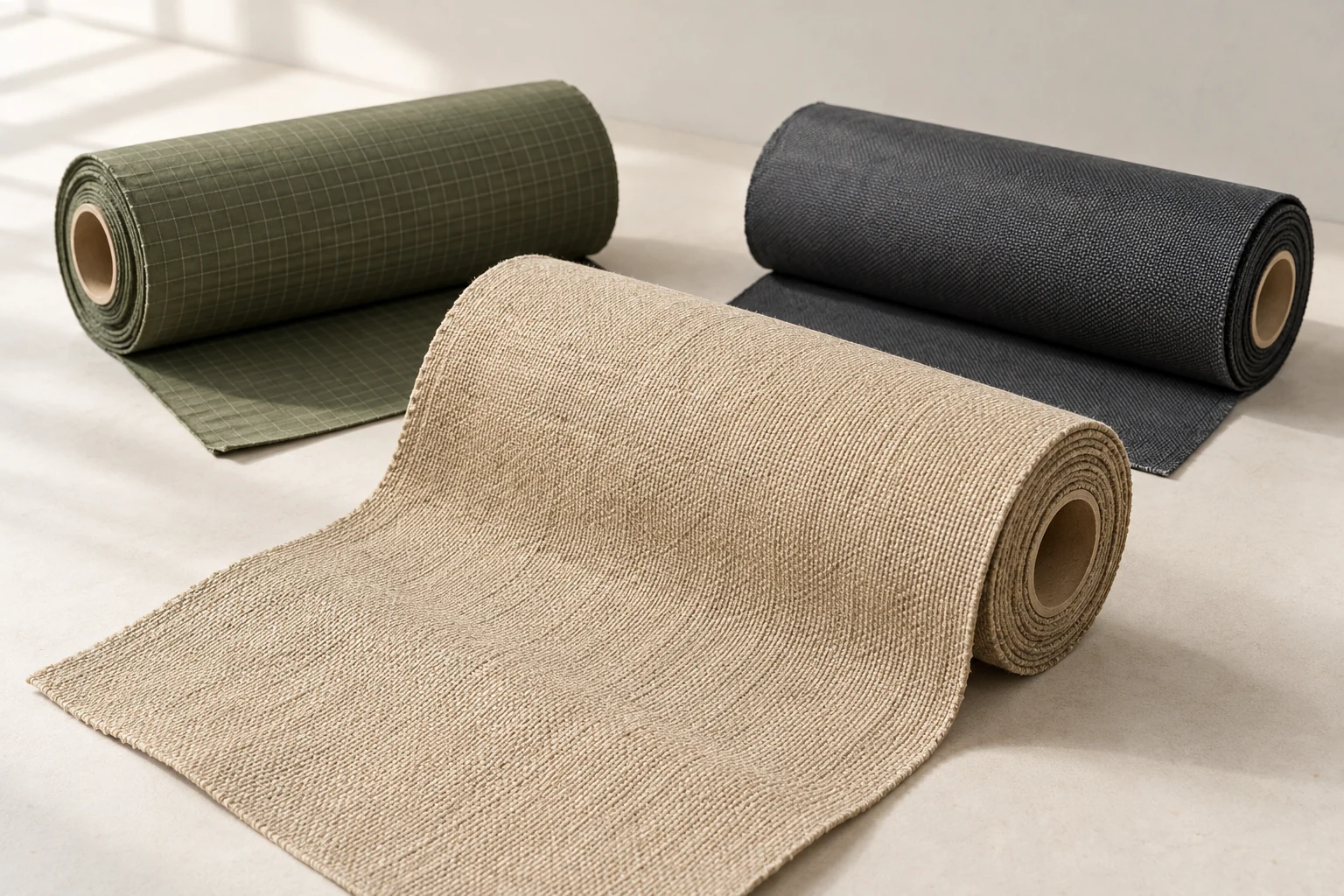
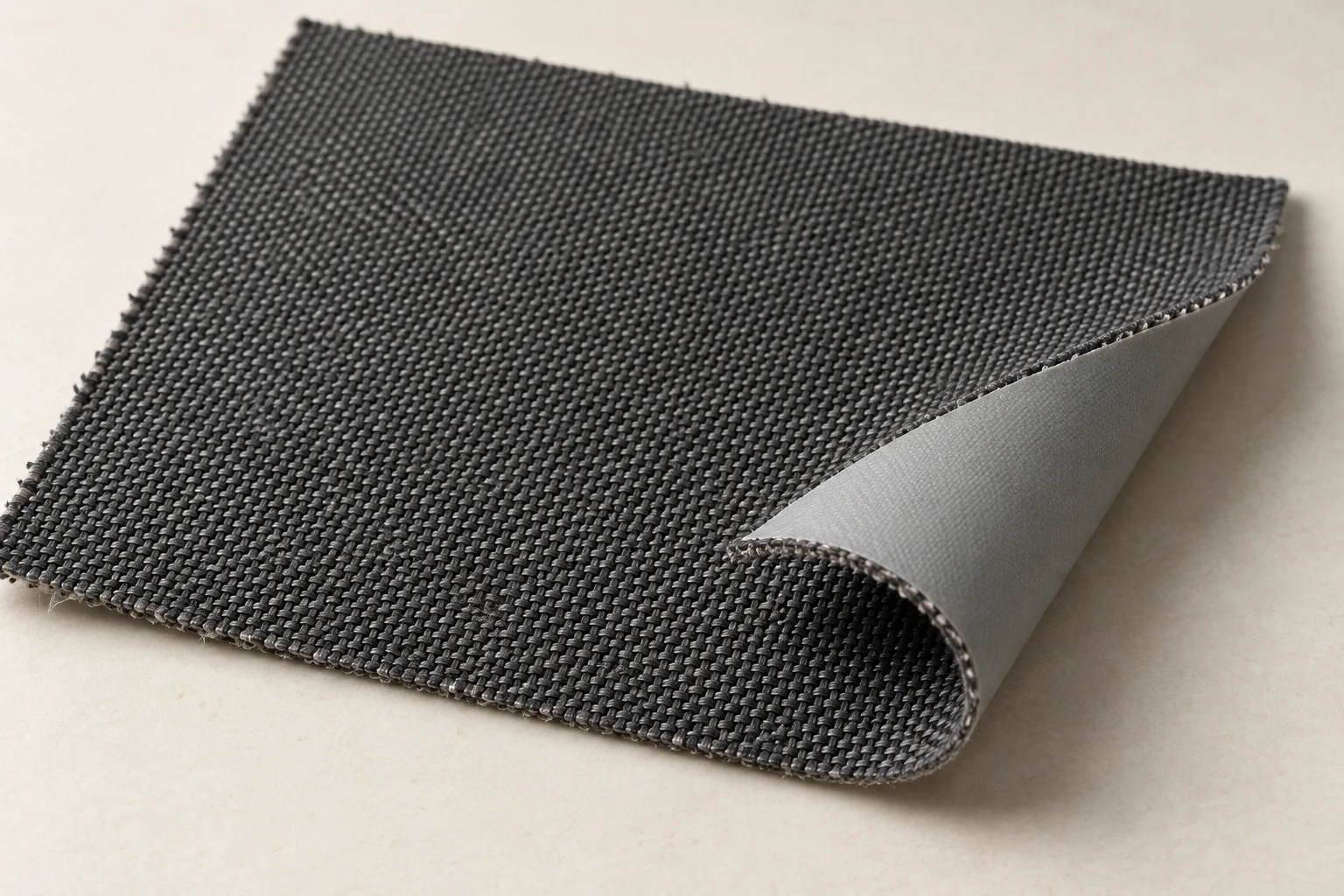
By MAZ Outdoor · Updated October 8, 2026. Images are AI-generated material illustrations, not photographs of MAZ fabric stock or evidence of measured specifications or test performance.
Denier vs GSM: what does each number tell you?
Denier, often written as D, is a linear-density unit: the mass in grams of 9,000 meters of yarn. American & Efird’s technical glossary explains this sizing system for continuous-filament thread. Applied to a fabric description, the number concerns its yarn specification, rather than the weight of a square meter of cloth.
GSM means grams per square meter, a measure of fabric mass per area. For example, a nominal 250 GSM fabric has a mass of 250 grams per square meter under the stated measurement conditions. That does not mean a completed bag weighs 250 grams: its fabric area, lining, reinforcement, closures and hardware all contribute.
| Specification | What it describes | What to confirm |
|---|---|---|
| Denier, such as 300D or 600D | Yarn mass per fixed length | Yarn type and whether warp and weft use the same specification |
| GSM | Fabric mass per square meter | Whether the value covers the finished coated or laminated material |
| Fiber composition | Materials making up the textile | Exact composition, material code and any separate backing layers |
| Weave or construction | How yarns or layers form the material | Construction details and an identified physical sample |
| Performance result | Response to a specified test | Method, conditions, specimen identity and acceptance criteria |
Why higher denier does not automatically mean a better bag
A higher denier indicates more yarn mass per unit length. It does not identify the polymer, yarn quality, fabric density or finish. Comparing two unrelated materials only by their D numbers can therefore hide the very differences that matter to the design.
As a purchasing example, imagine one quotation offers a 600D polyester shell and another offers a 420D nylon shell. The figures alone do not establish which fabric will better resist a particular abrasion or tear test. Request complete construction details and comparable evidence instead of ranking the options by the larger number.
The same caution applies to names such as Oxford, canvas and ripstop. Use them to start the material discussion, then ask for the actual composition and construction. A visible grid or a substantial hand feel is useful to review, but it is not a numerical performance result.
When discussing custom bag fabric options, identify the intended panel: outer shell, base, lining or pocket. Those areas may need different properties. A lighter lining and a reinforced base can be separate design decisions rather than reasons to choose one heavy material for every part.
Read GSM together with coating, backing and fabric width
Ask whether the quoted GSM describes the base textile or the finished material supplied for cutting. A coating, foam backing or laminated layer adds another part to the specification. Comparing a bare textile with a finished composite without noting that difference can produce a misleading weight comparison.
ASTM D3776/D3776M-20(2025) covers fabric mass per unit area through several sampling options. Its small-swatch option concerns the tested sample and does not necessarily represent the entire lot. Ask which option was used and how production sampling will support the agreed weight requirement.
Record the target and agreed tolerance, measurement conditions and material stage. If purchasing by the linear meter, also confirm usable width and price basis. A wider roll is not automatically the better value: the cutting layout, panel orientation and usable material all affect the comparison. Request a quotation based on the same bag pattern and finished specification.
Separate abrasion, tearing and finished-bag loading
“Durable” is too broad to serve as an inspection instruction. Start with the likely failure: a base rubbing against a floor, a panel tearing after damage, or a handle attachment opening during carrying. The chosen assessment should address that concern on a clearly identified specimen.
Abrasion resistance: repeated surface wear
ISO 12947-2:2016 describes Martindale testing for fabric specimen breakdown. Its published scope excludes coated fabrics, including laminated fabrics, and directs assessment of coated-surface abrasion to the ISO 5470 series. Have the laboratory select a method appropriate to the exact material and surface being evaluated.
For any quoted abrasion result, ask for the method, contact material, loading conditions and endpoint. Do not treat cycle counts from different test setups as a shared ranking. Also clarify whether the concern is visual scuffing, coating loss or fabric breakdown; those observations answer different purchasing questions.
Tear resistance: a different failure mechanism
ISO 13937-2:2000 identifies a single-tear method using trouser-shaped fabric specimens. It is one specific tear assessment, not a finished-bag carrying test. Ask the laboratory whether it suits the proposed material and request results in the relevant fabric directions when applicable.
Keep the method and specimen preparation visible when comparing reports. A result from another tear method, a different coating or an unconfirmed material code should not silently stand in for the material being ordered.
Load performance: evaluate the assembled construction
A strong shell does not by itself establish the strength of handles, seams, anchors, buckles or zippers. Define the intended contents and carrying conditions, then agree on an assembled-bag evaluation with the supplier or laboratory. State the load, handling sequence, duration or cycles, and failure criteria rather than converting denier into an unsupported kilogram claim.
Build a shortlist around the intended use
For a compact organizer, prioritize the required shape, flexibility, empty weight and contact with the contents. For a travel bag that will be repeatedly placed on rough surfaces, identify the base and corners as areas needing particular review. For a branded tote, include hand feel, appearance and the decoration process in the material decision.
These are starting points for a brief, not universal material prescriptions. Ask for a small set of identified candidates and compare them against the same requirements. Review drape, stiffness, fold behavior, surface texture and how the material works at a stitched corner.
If rain exposure matters, specify it separately using the water-resistant versus waterproof bag checklist. For visual consistency, connect the selected shell to the color and component approval record. Neither decision should be inferred from denier or GSM.
What to include in a fabric request for quotation
- Application: bag type, intended contents, carrying conditions and the panel where the fabric will be used.
- Material identity: supplier material code, fiber composition, yarn specification and weave or layered construction.
- Finished condition: coating, backing, laminate, visible face, target GSM, agreed tolerance and usable width.
- Appearance: physical reference, color, texture, stiffness and decoration requirements.
- Performance: relevant failure modes, suitable test methods and agreed acceptance criteria.
- Evidence: specimen or lot identity, report date, test conditions and any pretreatment.
- Commercial basis: quotation unit, proposed stock or custom material route, and any confirmed order constraints.
Carry the selected material code and revision into the preproduction sample approval. Require substitutions to be identified and reviewed. A replacement that retains the same D number can still change the construction, appearance or performance requirements.
Frequently asked questions
Can denier be converted directly to GSM?
No single conversion works from denier alone. Denier concerns yarn length, while GSM concerns fabric area. You also need information about construction, yarn density and any added layers to relate them for a particular fabric.
Is 600D fabric always stronger than 300D fabric?
The larger number establishes a higher yarn linear density, not a universal strength ranking. Compare the actual materials using the relevant performance method and conditions, and evaluate the finished bag for its intended carrying use.
Does a high GSM mean the fabric is waterproof?
No. GSM is a mass measurement. Water protection requires its own material and construction specification, including seams and closures, with evidence appropriate to the intended exposure.
Request a fabric comparison that supports a decision
Send MAZ Outdoor your custom bag brief with the intended use, reference appearance, weight priorities and performance concerns. Ask for identified fabric candidates, physical samples and a clear comparison of the specifications that matter to your project before confirming the material.