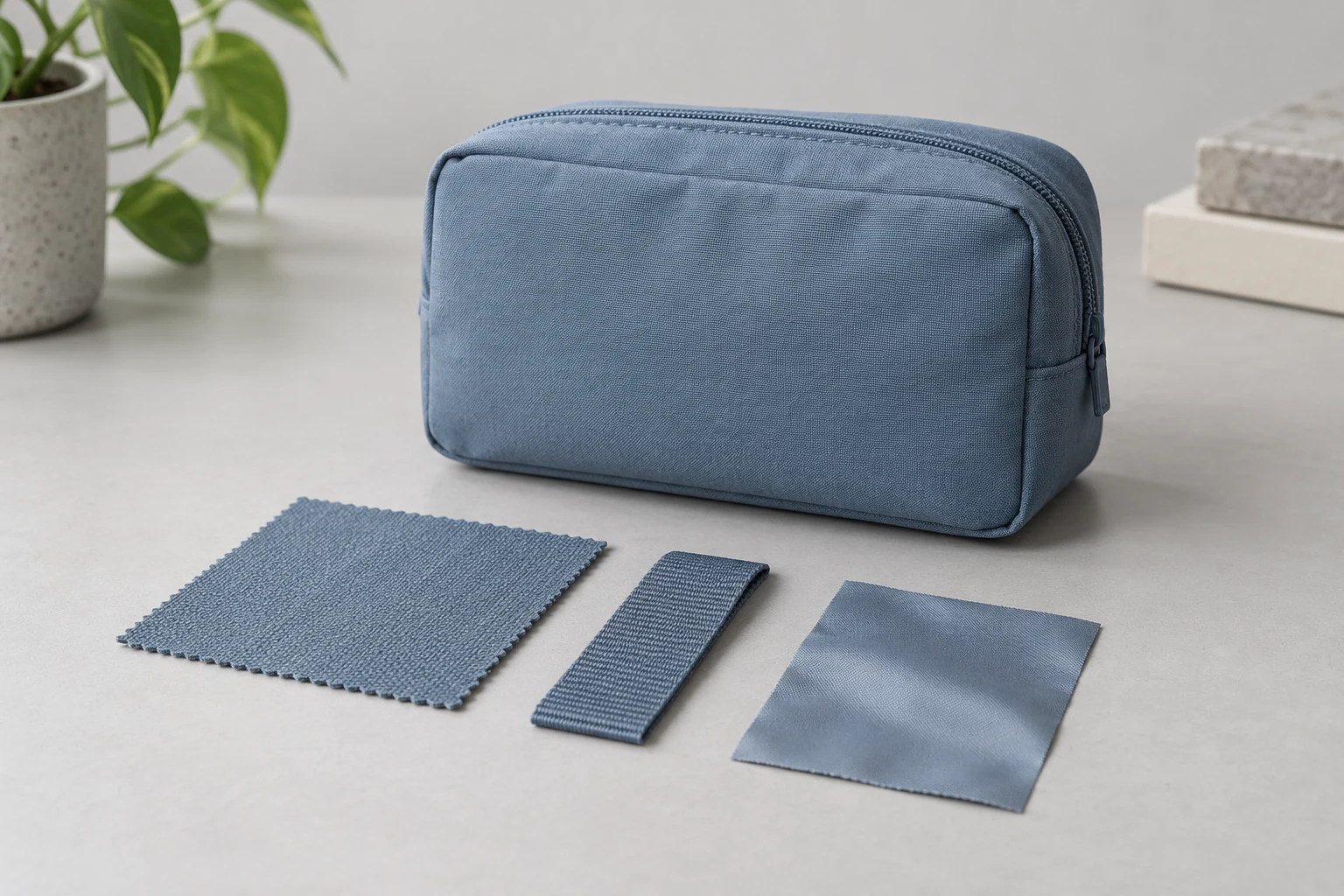
For reliable custom bag color matching, approve a physical reference, evaluate the actual materials together under agreed lighting, and record separate decisions for each component and production lot. A screen image or color code helps communicate intent, but the purchase specification also needs a material reference, an approval method and a rule for handling variation.
For buyers, the practical question is whether the shell, handles, zipper tape and branding form the intended combination when assembled. This guide explains how to turn that decision into instructions a supplier and an inspection team can follow.
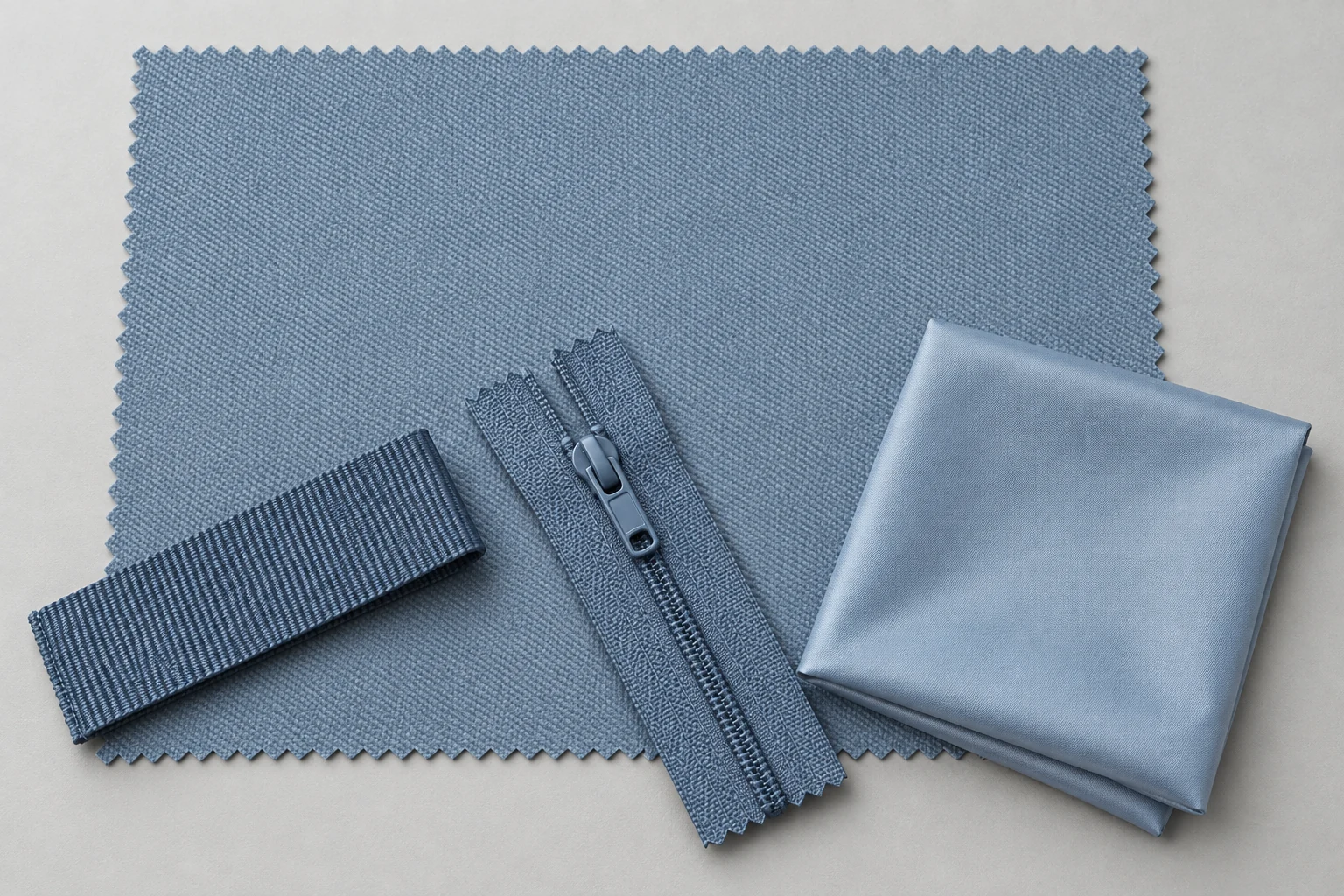
By MAZ Outdoor · Updated October 7, 2026. Images are AI-generated design illustrations, not photographs of MAZ products, approved color standards or laboratory tests.
What should a bag color approval actually cover?
Separate three decisions: the target shade, the relationship between components, and the durability of the color during intended use. A fabric can match the target when new yet transfer color through rubbing. Two components can also look coordinated individually and appear mismatched once stitched next to each other.
Write whether the design requires close matching, a coordinated tonal combination or deliberate contrast. For example, a blue shell with slightly darker blue handles can be an intentional design. If the instruction only says “all blue,” neither purchasing nor inspection has a clear basis for deciding whether that difference is acceptable.
| Decision | Reference to agree | Approval evidence |
|---|---|---|
| Shell color | Identified physical standard and actual shell material | Approved material sample with revision and date |
| Trim coordination | Webbing, zipper tape, lining and thread beside the shell | Component set showing intended relationships |
| Branding color | Decoration on the specified substrate | Print or embroidery sample on that material |
| Bulk consistency | Approved target plus agreed variation limits | Identified production-lot samples and release decision |
| Color durability | Relevant exposure and agreed test requirement | Report tied to the tested material or product |
Start with a physical reference and the correct material
Give the supplier the complete color reference, including the system and suffix when applicable. Identify the physical swatch being used, its condition and who retains the master. Avoid having separate teams approve against different printouts or an old sample that has faded.
Pantone provides different material formats for cotton, polyester, nylon and pigment applications, as explained in its material-selection guidance. For a bag specification, treat the reference as the target and still review the proposed production material. A paper reference and a textured fabric are different physical surfaces.
Record the fabric construction, finish and visible face alongside the color choice. When reviewing custom bag fabric options, request a color submission in the material and finish being considered. Ask the supplier to identify any substitution clearly before it enters the approval sequence.
For a dyed material, a lab dip is a small trial submitted for shade assessment. For stock fabric, request a cutting from the proposed stock and identify its lot. For a printed design, ask for a strike-off on the intended substrate. These submissions answer different production questions; label each one accordingly.
Review the shell, webbing and zipper tape as a set
Arrange the components next to each other in the relationships they will have on the bag. Include lining if it will be visible when the bag opens. Specify whether thread should blend with the shell or remain visible, and review any plastic or metal trim whose appearance affects the design.
Keep the bag accessories specification linked to the color record. A replacement zipper tape or webbing source needs its own review even if its commercial shade name sounds identical. Give each component an identifier instead of relying on “the blue sample” in an email.
Inspect decoration on the actual background material as well. A logo approved on white paper does not resolve its appearance on a dark woven shell. Use the chosen printing, embroidery or label method for that submission, and record whether the approval covers shade, position or both.
Agree on lighting and a usable acceptance method
Metamerism means two samples appear to match under one lighting condition but differ under another. X-Rite explains this lighting-dependent effect. A useful buyer check is to review the component set under an agreed primary source and an additional source relevant to the bag’s intended selling or use environment.
Record the actual viewing conditions and keep them consistent between buyer and supplier. A phone photograph can document which sample was discussed, but it should not silently replace the agreed physical comparison. Ask for a new physical submission when the approval depends on a subtle shade difference.
What if the specification includes a Delta E limit?
Delta E is a calculated color difference, and the calculation method matters. X-Rite’s color-tolerance guidance recommends consistent calculation methods and checking numerical tolerances against visual judgments. A bare instruction such as “Delta E below the limit” is incomplete if the formula and measurement conditions are unspecified.
Have the supplier or testing specialist agree the formula, instrument setup, sample presentation, illuminant and observer settings, and acceptance limit with the buyer. Retain the agreed settings with the results. This guide does not prescribe a universal number for every bag material; establish workable limits using the actual materials and the intended visual result.
Check color transfer separately from shade matching
Consider where the bag will contact pale clothing, its own light-colored panels or the items inside it. Dark handles against a light jacket and a dark lining around pale contents are different exposure scenarios. List the contact surfaces and expected moisture conditions when discussing colorfastness requirements.
AATCC TM8 evaluates color transfer from colored textile surfaces through controlled rubbing, using dry and wet test cloth procedures. Its published scope concerns the tested textile material. A passing result should be read against the agreed method and criteria, with the tested specimen identified.
Ask which component and colorway a report covers, whether pretreatment was used, and whether the result is relevant to the proposed production material. A rubbing result does not answer every question about washing, perspiration, light exposure or storage contact. Select additional assessments with a qualified laboratory when those conditions matter to the product brief.
Carry the approved color into bulk production
Keep an approved reference set with the shell and visible components identified. Record the decision, approver, date and revision, then link that record to the preproduction sample approval. Make it clear whether approval covers a trial color submission, an assembled sample or material from a particular production lot.
Before bulk cutting, agree how production material will be checked against the retained reference and how distinct lots will be identified. If a shade difference is found, require a documented decision before combining those materials. An accepted deviation for one order should have a defined scope rather than silently becoming the target for future orders.
For repeat orders, resend the approved reference details and ask whether the proposed materials come from a new lot. Retain representative samples and the associated release record so a later complaint can be traced to an actual submission and decision.
Color information to include in your request for quotation
- Design intent: close match, tonal coordination or contrast for each visible component.
- Target reference: complete color code or physical master, its identifier and revision.
- Materials: shell, lining, webbing, zipper tape, thread and decoration, including proposed finishes.
- Submission type: lab dip, stock cutting, print strike-off, component set or assembled sample.
- Viewing and measurement: agreed lighting, visual criteria and any fully specified instrumental tolerance.
- Use conditions: likely contact surfaces, moisture, cleaning and relevant colorfastness requirements.
- Bulk control: lot identification, release responsibility and the process for approving deviations.
Frequently asked questions
Is a Pantone code enough to approve a custom bag color?
It is a useful starting reference, but approval also needs the actual material and an agreed evaluation process. Confirm the full code and reference format, then approve the relevant physical submission and assembled component relationship.
Can I approve fabric color from a phone photograph?
Use photographs to communicate sample identity and obvious issues. For a shade-sensitive approval, follow the agreed physical or controlled digital evaluation method; an ordinary phone image alone does not establish consistent viewing conditions between teams.
Should every component use exactly the same shade?
That depends on the design. Specify which parts require close matching and where tonal differences or contrast are intentional. Review the parts together, then retain the approved set so inspection follows the same visual target.
Prepare a color brief that can be quoted and checked
A clear color brief connects the design target to specific materials, review conditions and production records. Send MAZ Outdoor your bag project brief with the reference colors, material preferences, component relationships and intended use. Ask which submissions and checks are appropriate before confirming the order.