When comparing water-resistant vs waterproof bags, specify the water exposure first, then verify the complete bag rather than the fabric alone. A water-repellent surface, coated shell or protected zipper does not establish that seams, pockets and openings will keep the contents dry. Ask for evidence that matches the finished construction, closure instructions and conditions you intend to claim.
For brands and procurement teams, the useful decision is whether the product needs limited rain resistance, protection during sustained exposure, or an explicitly verified immersion capability. Those are different briefs. This guide explains how to turn a vague “waterproof bag” request into a specification that suppliers can review and buyers can check.
By MAZ Outdoor · Buyer guide · October 6, 2026
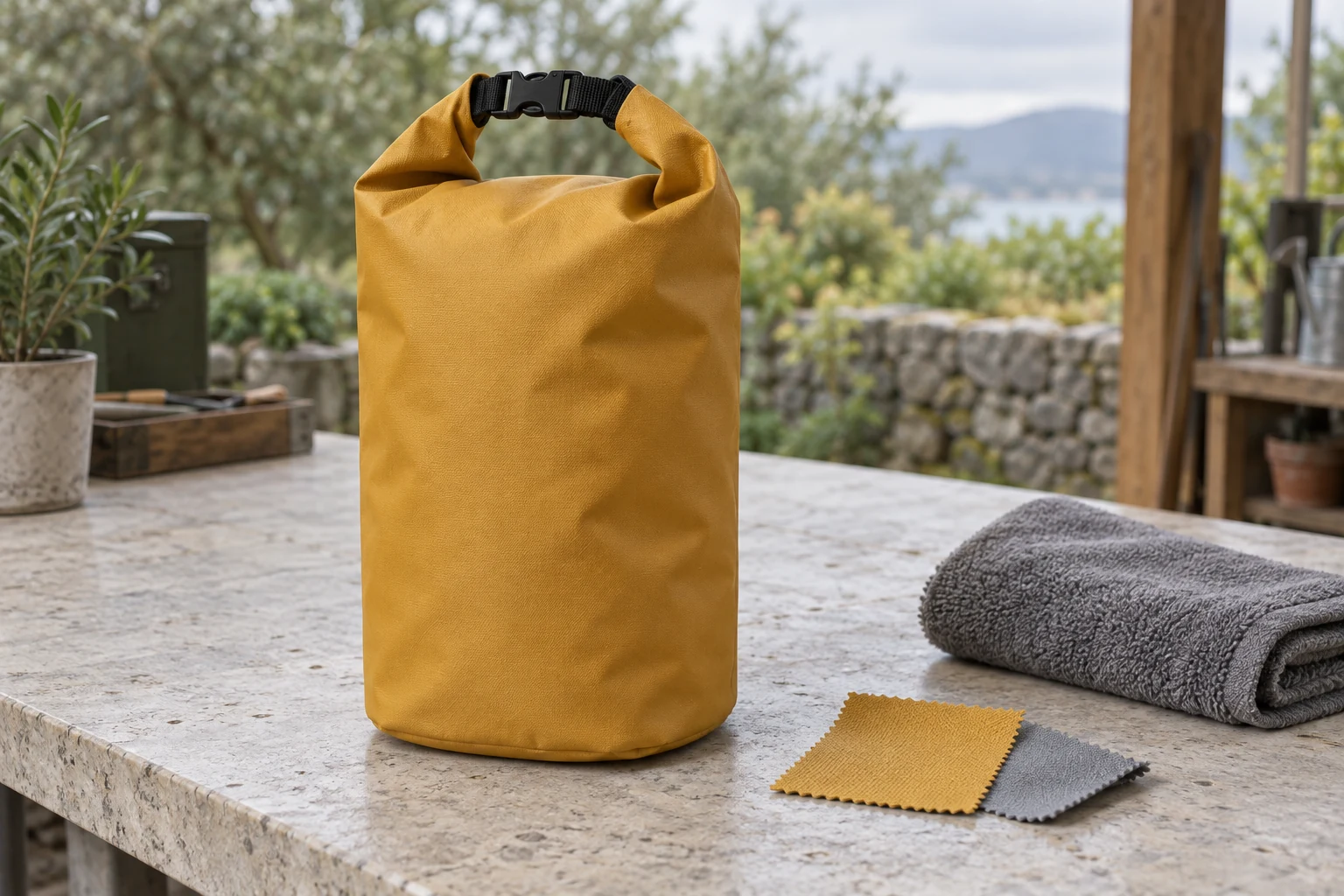
Images are AI-generated design illustrations, not photographs of MAZ products or water-protection tests.
What do water-resistant and waterproof mean for your order?
Use these terms as a starting point for a discussion, not as a shared numerical rating. In a procurement brief, water-resistant describes limited protection against the agreed exposure. A waterproof claim should identify the conditions under which the complete bag prevents water entry. If immersion is required, state it separately; do not assume the word waterproof includes every depth or duration.
Water-repellent describes another part of the story: surface behavior. GORE-TEX’s technical FAQ explains that its durable water repellent, or DWR, treatment is applied to the outer fabric and helps water bead and roll off. It distinguishes this treatment from the waterproof membrane and finished construction. A beading photograph therefore cannot, by itself, prove a custom bag’s protection.
| Term in the brief | What to confirm | What not to assume |
|---|---|---|
| Water-repellent surface | Finish and the evidence for surface behavior | That seams or closures stop water |
| Water-resistant bag | Agreed rain or splash exposure and acceptable water entry | Protection for unlimited exposure |
| Waterproof bag | Finished-bag construction and results under stated conditions | Suitability for immersion without separate evidence |
| Immersion-capable bag | Depth, duration, orientation, closure and test configuration | That a different size or closure performs identically |
Start with the exposure and the contents
Describe the actual journey: a short walk between buildings, repeated commuting in rain, storage on a wet boat deck, or an accidental fall into water. Specify whether exposure comes from above, splashes from the sides, or contact with standing water. The supplier needs this context before selecting a material and closure.
Also identify what must remain dry. Clothing, printed documents and electronic equipment create different consequences if water enters. Define the acceptable outcome instead of asking only for a stronger marketing label. An external pocket may have a different protection requirement from the main compartment; record that distinction.
A useful initial brief says which compartments need protection, how the bag will be carried, and how often it will be opened during use. If the expected conditions are uncertain, resolve them before committing to a claim or ordering production samples.
Check what the fabric evidence actually covers
Ask for the complete material specification: base textile, coating or laminate, backing, finish, thickness or weight where relevant, and supplier reference. “Nylon,” “polyester” and a denier number do not describe the whole water barrier. Two fabrics with a similar visible weave can have different backing constructions.
ISO 811:2018 defines a hydrostatic pressure method for measuring fabrics’ resistance to water penetration. Its scope concerns fabric. A report for a material swatch is therefore evidence about that specimen, not a report on the completed bag’s seams, zipper installation or roll-top closure.
If a supplier gives a hydrostatic head figure, request the report, method, sample identity and relevant conditioning. Check that the tested material matches the proposed production material. Do not convert a fabric result into a blanket “submersible bag” claim.
Review the custom bag fabric options with the construction and intended exposure in mind. Ask which material choices can support the required manufacturing process, appearance and budget. Confirm feasibility for the actual project before treating an option as an approved specification.
Follow the seams and every attachment through the barrier
Trace the whole bag, including the base, side panels, pockets, handles, straps and logo applications. A barrier in the shell does not resolve an opening elsewhere. Sewn construction introduces needle holes, so a design intended to stop water entry needs an appropriate approach to those seams and penetrations.
GORE-TEX’s embroidery guidance identifies unsealed needle holes as a possible leakage path in its garments. The relevant procurement lesson is to review every penetration; a bag still needs evaluation of its own materials and construction.
A supplier may propose seam tape, another sealing treatment, welded joins or a different construction. Ask which method suits the selected material and how corners, intersections and attachment points will be handled. A line of tape on one easy seam is not evidence that every joint in the bag has been addressed.
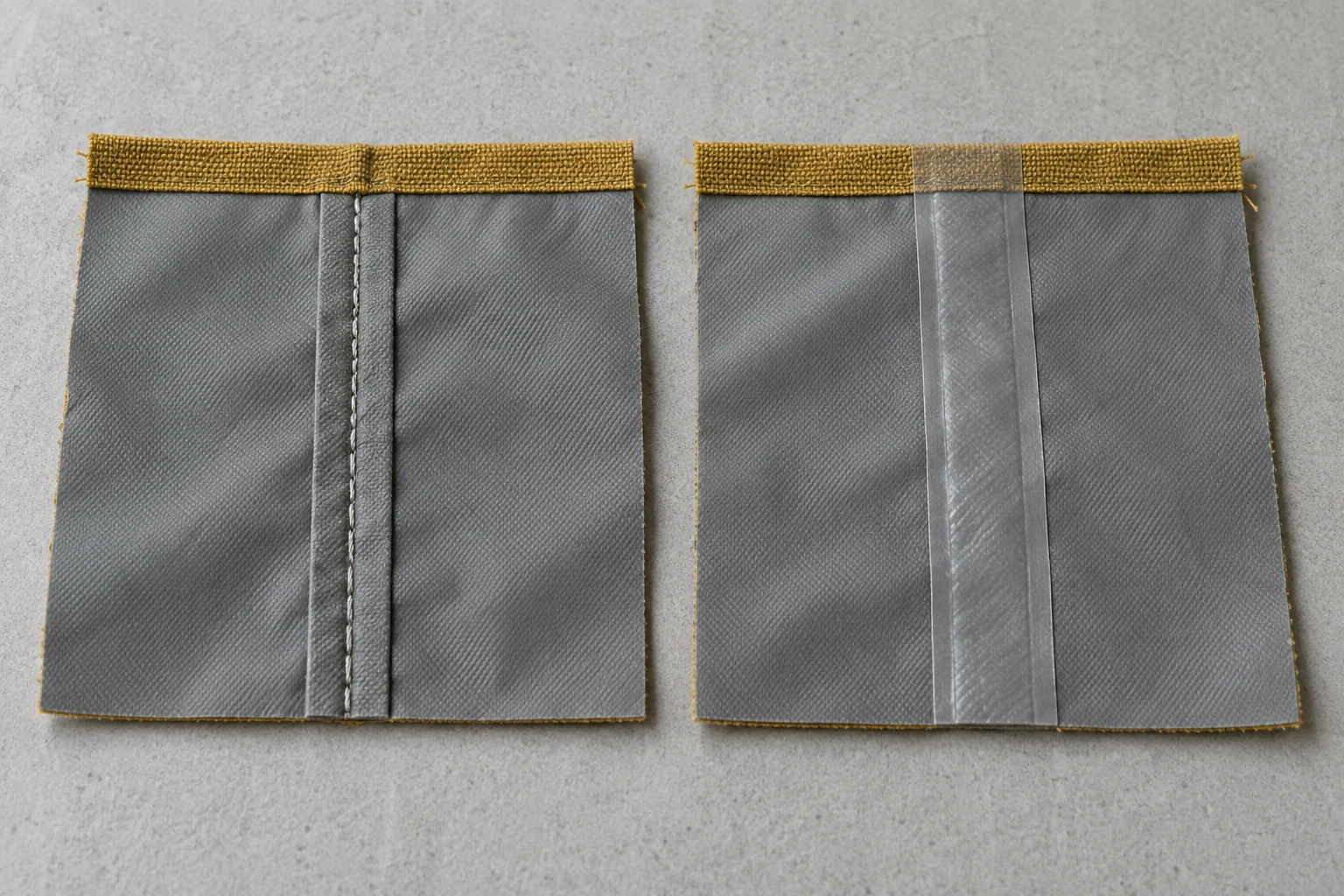
Inspect the inside of a development sample. Identify where the proposed seal ends, how it follows curves and whether accessories create additional penetrations. Record these details in drawings or construction notes so a later sample can be compared with the agreed design.
Decoration belongs in this review too. A sewn label, embroidered graphic or added attachment can change the construction being evaluated. Ask whether the final decorated version is included in the verification scope. MAZ Outdoor’s sample development process is a practical point to discuss those details before a release decision.
Choose the closure as part of the complete system
Protected zippers still need an exact specification
Specify the zipper model, slider, installation direction, end treatment and surrounding construction. A dark coated zipper can suggest weather protection visually, but its appearance does not establish its rating.
For example, YKK’s AquaGuard technical leaflet describes that product as water repellent rather than waterproof or watertight. This is a product-specific limitation, not a statement that all zipper systems behave alike. Ask for the exact component’s documentation and evaluate it as installed in the bag.
The custom bag zipper guide helps separate chain structure from slider and installation choices. If a higher water-protection requirement changes the component, also review opening effort, access, cost and repair expectations.
Roll-top closures need usable headroom and instructions
Leave enough unfilled space for the approved closure procedure. Check the bag with its intended contents, not only as an empty sample. Record the fold or roll sequence, fastening arrangement and usable capacity after closing.
Sea to Summit’s Evac Dry Bag instructions specify three rolls for that product and advise against submersion despite describing its body fabric as waterproof. That example shows why closure instructions and use limits belong beside material specifications. Do not copy a roll count to another design without confirming its own procedure and performance.
Review the agreed buckle and closure components through the bag accessories selection. Ease of use matters because the product must be closed as intended each time it is used.
What should a finished-bag test report identify?
Agree the evaluation with the supplier or testing provider before ordering bulk production. Select a recognized method where it fits the product and claim; otherwise document a suitable agreed protocol. Do not present a custom check as certification to a standard it did not follow.
The report should identify the sample, size, material and closure configuration. It should describe exposure, duration, orientation, preparation, loading and the method used to detect water entry. For an immersion requirement, it also needs the applicable depth and other relevant conditions.
Define acceptance criteria in advance. “Passed” has little value without knowing what was measured and which compartments were assessed. Ask whether evaluation covers a new sample only or includes the agreed conditioning that reflects intended use.
A demonstration video can help explain the setup, but it does not replace a traceable result. Check that the report applies to the final decorated bag, not an earlier plain prototype. A later change to the shell, seam process or closure should trigger a review of whether the existing evidence still applies.
Put the water-protection requirement into the RFQ
Use a compact specification that connects the intended claim to the product being quoted. Include these fields:
- Use and exposure: rain, splash or immersion conditions, plus duration and carrying orientation.
- Protected compartments: main storage, external pockets and any exceptions.
- Materials and joins: approved shell construction and the proposed sealing approach.
- Closure: exact components, closing procedure and capacity when closed.
- Verification: method or protocol, sample configuration, acceptance criteria and responsible party.
- Claim and instructions: wording supported by the evidence, use limits and agreed care guidance.
Keep this requirement attached to the sample approval record. If a lower-cost alternative changes the materials or closure, compare it against the same exposure requirement instead of assuming the original claim still holds.
Buyer questions about water protection
Does waterproof fabric make the whole bag waterproof?
No. Fabric evidence covers the tested material. The finished bag also needs suitable seams, attachment details and closures, with verification for the stated exposure.
Is a roll-top bag automatically suitable for immersion?
No. Confirm the particular design’s documented capability, closure procedure and limits. A roll-top appearance is not an immersion test result.
Can a rain cover meet the requirement instead?
It may be an option for the intended scenario, but specify its coverage, fit and use procedure. Verify the bag and cover combination under the agreed exposure; do not transfer an untested waterproof claim to either component.
Request a specification around the intended exposure
The most useful comparison of water-resistant vs waterproof bags starts with the conditions and evidence you need. Send MAZ Outdoor your project brief with the bag style, contents, exposure scenario, required compartments, quantity and destination. Ask the team to review feasible materials, construction and the verification scope before committing to product claims.