By MAZ Outdoor · Published October 3, 2026 (UTC+8)
A zipper can look right on a trim card yet feel awkward after it is sewn into a bag. The opening may curve around a corner, a lining may sit too close to the slider, or a full compartment may pull against the closure. For buyers specifying custom bag zippers, the useful question is how the complete closure will work in the intended bag.
Choose the zipper structure alongside the opening shape, expected contents, slider function and appearance. Then approve the exact zipper configuration on a sewn sample. Coil, molded plastic and metal describe different element structures. They do not, by themselves, establish a finished bag’s strength, service life or water protection.
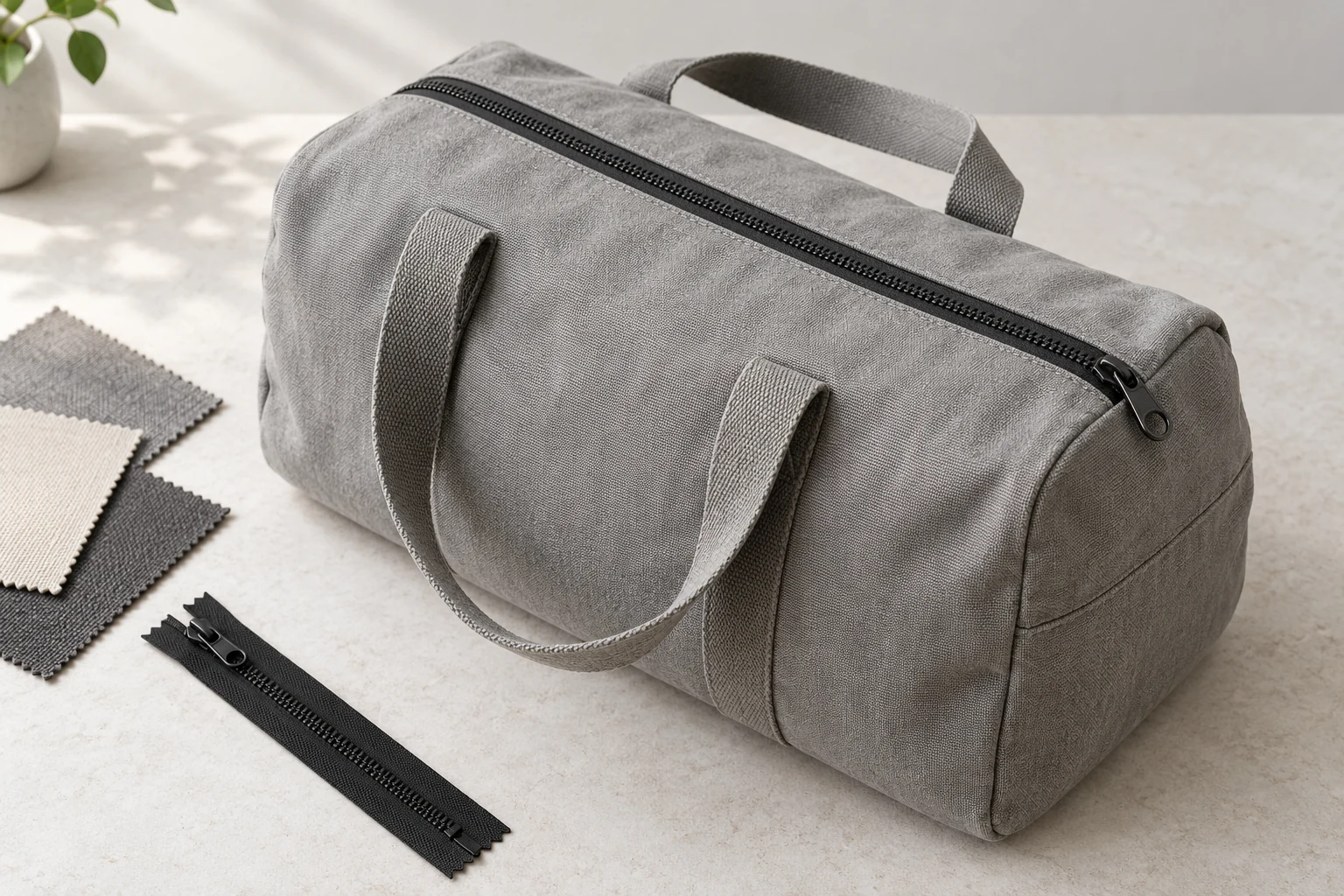
The images in this guide are AI-generated illustrations of generic components and bags, not photographs of tested MAZ Outdoor products.
What is the difference between the three zipper types?
The elements are the interlocking parts commonly called teeth. YKK’s introduction to zipper types describes coil elements as spiral plastic, including polyester or nylon; its VISLON® products use injected plastic elements; metal zippers use metal elements. VISLON® is a YKK trademark. Use “molded plastic zipper” for the general category unless specifying that particular brand and product.
| Structure | What to specify | What to review on the bag |
|---|---|---|
| Coil Continuous spiral plastic elements | Exact model, element material, installation orientation and compatible slider | Operation through the complete opening, especially corners; clearance from lining and seam allowances |
| Molded plastic Individual molded plastic elements | Exact product and application suitability, element profile, color and slider configuration | Appearance at the chosen scale, opening behavior and attachment at the ends |
| Metal Individual metal elements | Metal or alloy, finish, model and compatible slider | Finish against other hardware, handling feel and compatibility with adjacent materials |
Use this table to organize a supplier discussion rather than rank the three categories. A small internal pocket and a large travel bag opening present different design questions. Ask for two suitable configurations when the choice is unclear, then compare them in the same bag construction.
Include pull tabs, buckles and other custom bag accessories in that review. Hardware that looks coordinated in separate photographs may differ in finish or scale when assembled.
Specify each opening according to its job
Main compartments
Start with an opening drawing and the intended contents. Show where the zipper begins and ends, whether it follows a curve, and how much access the user needs. A backpack opening that wraps around the upper corners should be assessed in that sewn shape. A loose length of zipper cannot show the effects of panel stiffness, seam construction or packing pressure.
Decide whether one slider is sufficient or two meeting sliders would improve access. If lock-compatible pulls are requested, define the intended lock interface and demonstrate it on the sample. Two sliders alone do not establish theft resistance or a security rating.
Front pockets and internal pockets
List the items each pocket should hold and how users will reach them. A pocket for small accessories needs a usable opening and enough clearance to retrieve its contents. An internal pocket also needs attention to lining placement and the finished treatment at both ends.
Assign a separate reference to every opening in the technical brief. For example, identify the main compartment, front organizer and internal pocket individually. This allows different configurations where useful and prevents an approved main zipper from being treated as blanket approval for every pocket.
What belongs in a custom bag zipper specification?
YKK’s zipper selection guide separates function and slider choice, gauge, and details such as color, finish and length. Although that guide focuses on wearables, these fields provide a useful starting point for a bag specification. Add the bag-specific opening drawing and acceptance checks.
- Brand and exact product reference. Record the manufacturer and model when a branded component is required. If alternatives are acceptable, identify what must remain equivalent and require approval before substitution. Naming YKK in a reference document does not mean every MAZ Outdoor bag includes YKK components.
- Element structure and size designation. Write down the supplier’s full specification, not just “strong zipper” or a size number. Request a drawing or dimensional information where fit matters. Do not assume a number represents an exact, universal millimeter measurement across every product family.
- Finished length and measuring points. Mark both endpoints on the drawing and state the agreed measuring method. Distinguish the usable opening from any tape extending beyond the stops or into the seam. This helps prevent a correct component length from producing an opening that is too short.
- Slider and pull configuration. Specify slider count, operating direction and whether a locking function is required. Show pull-tab shape, finish and any cord attachment. Ask the supplier to confirm compatibility with the selected chain instead of treating sliders as interchangeable.
- Tape, element and hardware colors. Approve these separately where necessary. Supply physical color references when appearance is critical, and review the complete assembly under agreed lighting. A matching color name alone is not an acceptance standard.
- Installation and end treatment. Identify orientation, seam position, end tabs and reinforcement details on the construction drawing. Include any protective flap or covering that could affect access to the pull.
Review the zipper together with the chosen bag fabric and lining. Ask the supplier to check the combination of fabric thickness, coatings, seam allowances and hardware finish. An approved trim swatch should remain traceable to the version used in the sewn sample.
Check the sewn sample before approving bulk production
Set up a practical review around the intended use. Fill the sample with representative contents, then operate the closure along its entire path. Look closely at the gap between the slider and lining, the transition through corners, and the finished ends. Record where the user must reposition a hand or move fabric out of the way.
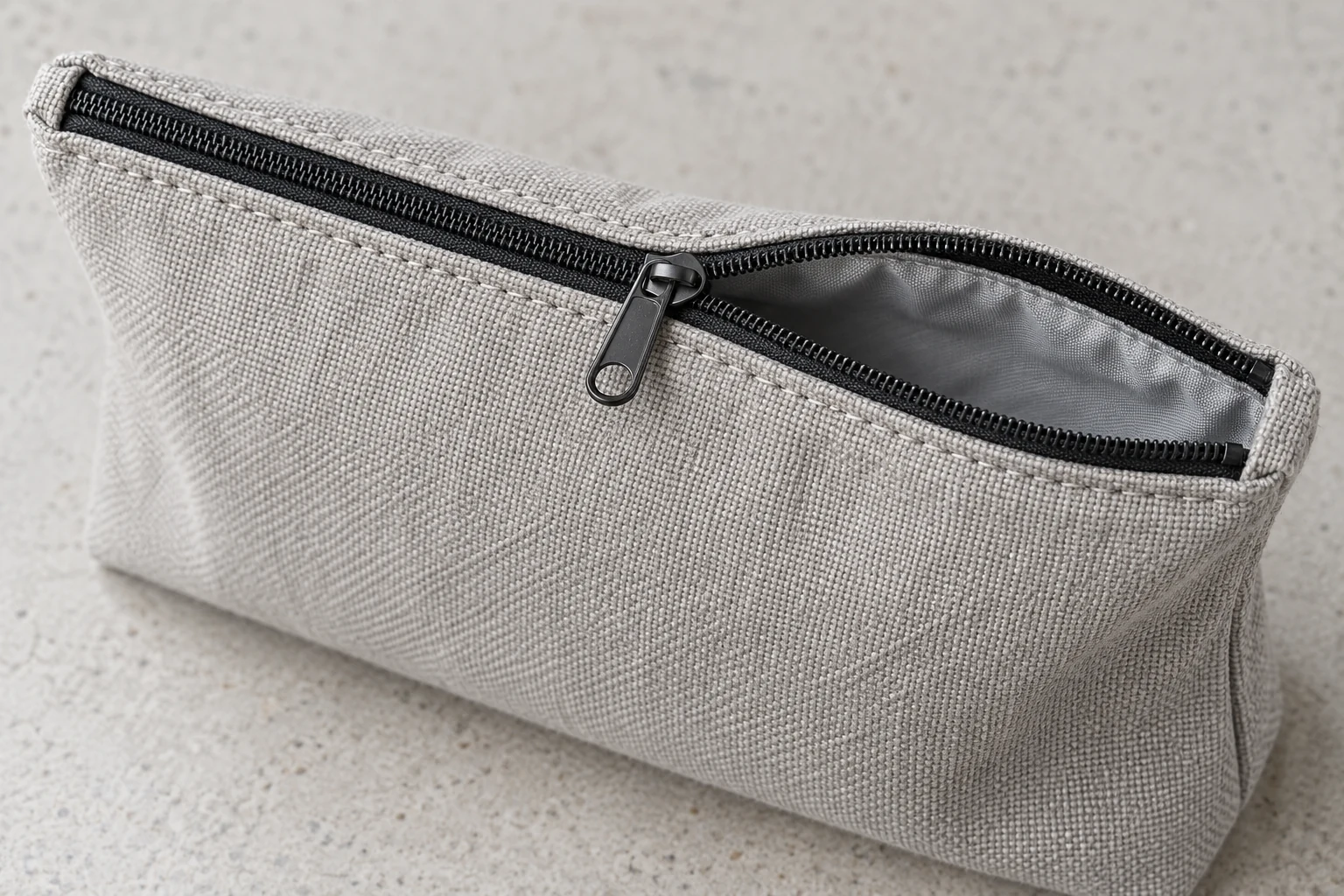
A close view of the opening helps explain what to inspect, but it cannot establish performance. Agree the load, operating conditions, number of repetitions and acceptance criteria before requesting a formal test. Keep an informal handling review separate from a documented laboratory or factory test report.
- Access: Can the intended items pass through the opening without forcing the panels apart?
- Operation: Does the slider travel without repeatedly catching lining, thread ends or seam material?
- Grip: Can the intended user find and hold the pull comfortably in the planned use conditions?
- Assembly: Are both ends secure and finished consistently, with no unexpected puckering or exposed rough edges?
- Appearance: Do tape, elements and pulls match the approved references and the rest of the bag?
Use the sample development stage to resolve these details. Photograph approved views and label the sample revision. If the zipper, lining or opening construction changes afterward, identify which checks need repeating before production approval.
Does a coated zipper make the bag waterproof?
A coating or smooth outer appearance is not enough to support a waterproof claim. For example, YKK’s care guidance explicitly describes VISLON® AquaGuard® as water repellent rather than waterproof or watertight. It also gives application restrictions for that particular product, including avoiding curved installations. Those restrictions should not be generalized to every zipper.
If water protection matters, describe the exposure scenario and request a suitable component recommendation. Then define how the complete bag will be assessed, including fabric, seams, opening and closure ends. Keep any product claim within the scope of the evidence obtained for the final construction.
Buyer questions about bag zippers
Is a metal zipper always stronger than a coil zipper?
The material category alone does not establish that comparison. Request relevant performance information for the exact components and assess the complete installed closure against the intended application.
Can I request only a “No. 5 zipper”?
That leaves important details unresolved. Add the manufacturer or approved alternative, product family, slider, length, colors and installation details. Ask the supplier to confirm the complete component reference.
Should every pocket use the same zipper?
They can share a configuration if it suits all openings, but decide this through the pocket requirements and sample review. Consistent appearance does not require identical components everywhere.
Prepare a zipper brief for a useful quotation
For custom bag zippers, send an opening drawing, intended contents, quantity, fabric and lining references, preferred appearance and any specified component model. Add the sample checks and evidence needed before approval. The custom bag quote checklist explains the wider information needed to compare quotations.
Send MAZ Outdoor your bag project brief with these details. If you have not chosen a zipper type, include photographs of the intended opening and describe how the bag will be used so the supplier discussion can focus on suitable configurations.