
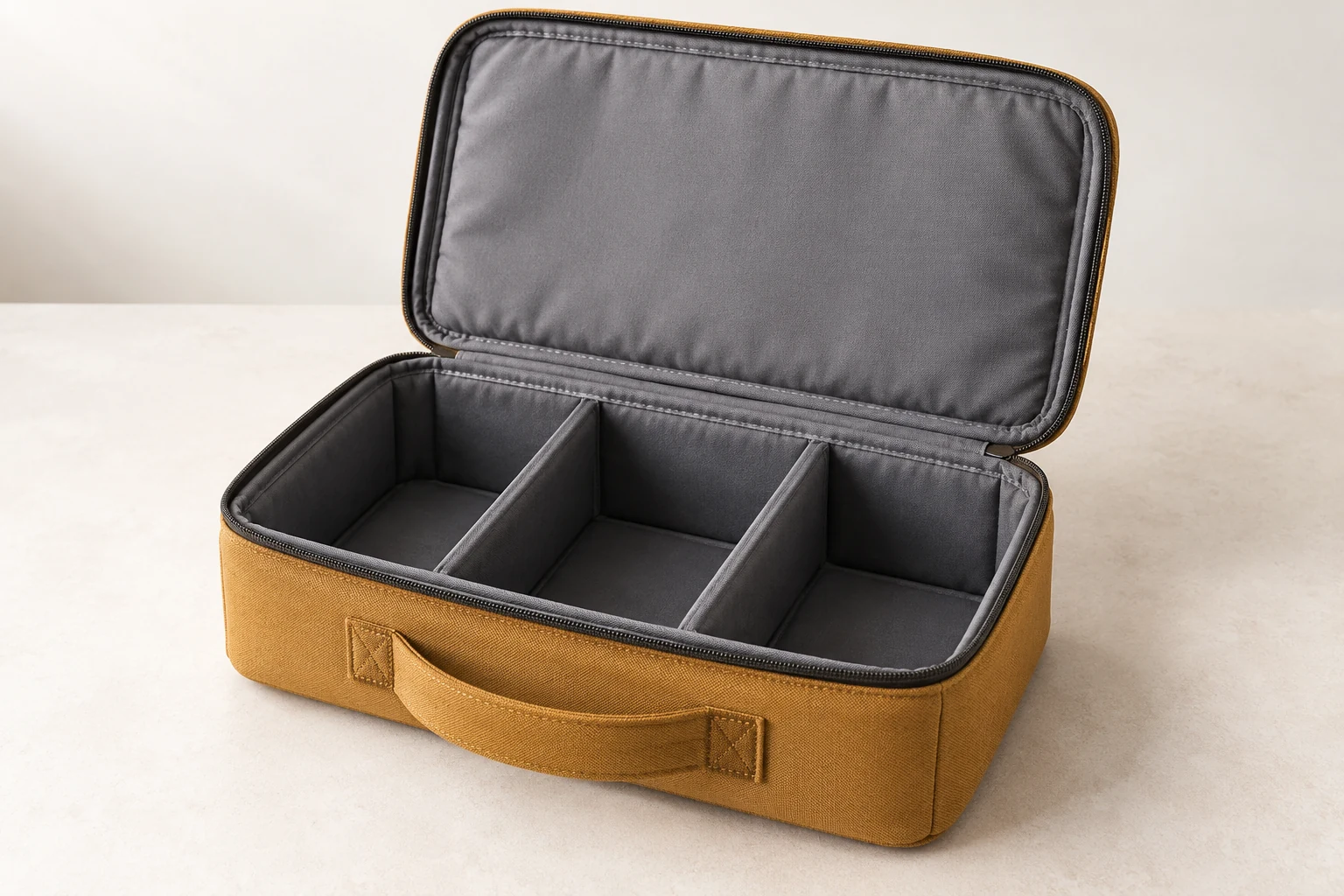
Custom bag lining and padding should be specified as separate parts of the construction. Define the inner fabric, foam type and thickness, padded areas, finished compartment dimensions and attachment method. Then approve a sample loaded with the actual intended contents. A soft interior or a thick-looking divider does not, by itself, establish how much protection the complete bag provides.
For brand owners and procurement teams, the main decision is where the interior needs a finished surface, where it needs cushioning, and where it needs structure. Treating every layer as “padding” makes supplier proposals harder to compare and can leave important details unresolved.
By MAZ Outdoor · Buyer guide · October 11, 2026. Images are AI-generated illustrations of generic construction, not actual MAZ products or evidence of tested performance.
Separate the lining, cushioning and structure
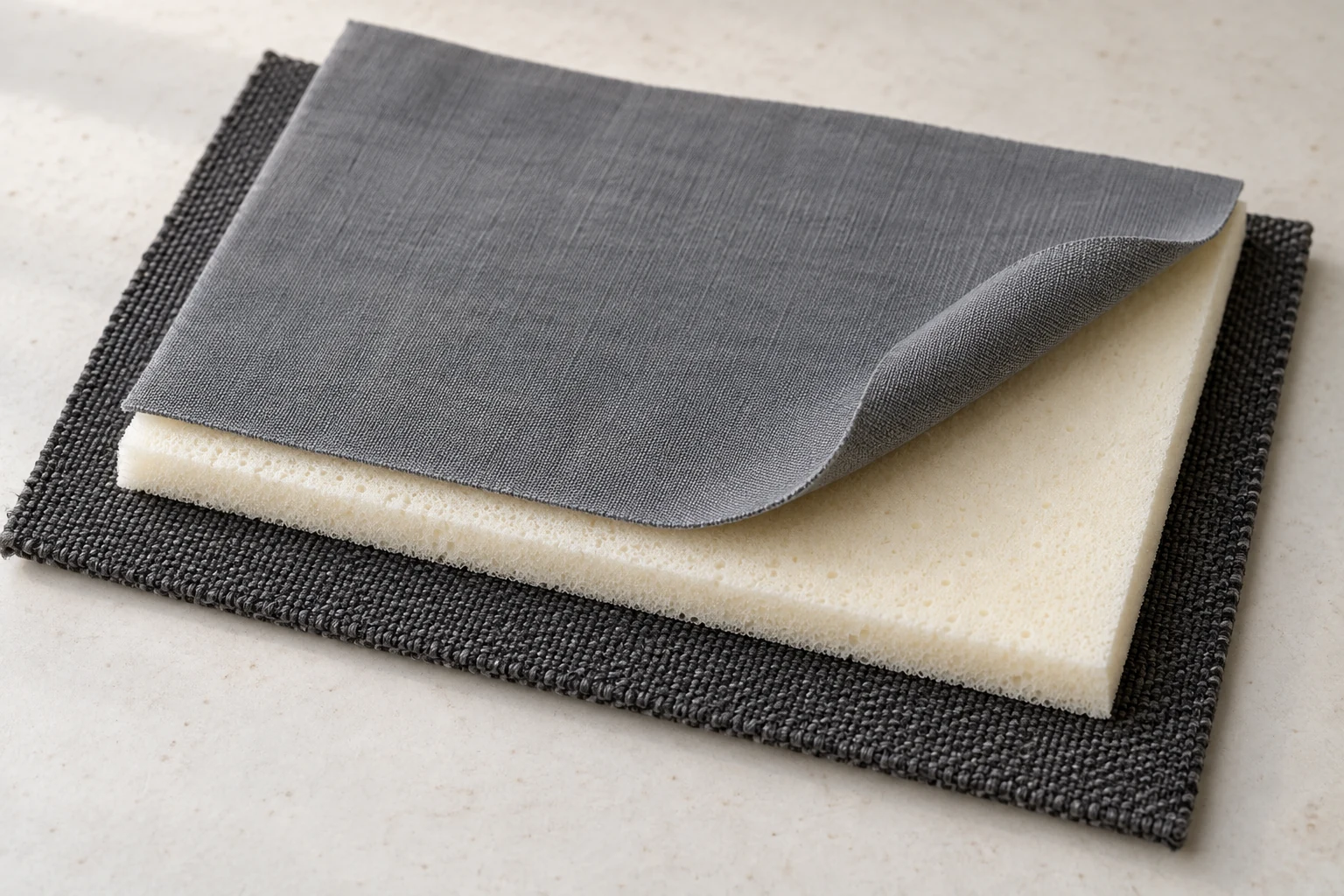
The lining is the fabric surface facing the contents. Foam or another cushioning layer sits behind that surface when padding is required. A stiffener is a separate component intended to help a panel retain its shape. One bag may use all three, but they answer different questions.
| Component | Main design job | What to specify |
|---|---|---|
| Lining fabric | Finish the interior and form pockets or divider covers | Material reference, construction, color, finish and attachment |
| Cushioning layer | Provide a compressible layer where the design needs it | Material type, grade, thickness, coverage and relevant properties |
| Stiffener | Support the intended panel shape | Material, thickness, placement and edge treatment |
| Binding and seams | Join layers and finish exposed edges | Location, construction, seam allowance and approved appearance |
Ask for a layer description for the base, sidewalls, lid and dividers individually. “Fully padded” is incomplete if the lid has foam but the base does not, or if a pocket is only lined. MAZ Outdoor’s custom bag fabric service covers discussions of shell, lining and supporting materials; final options need to be confirmed against the project brief.
Choose custom bag lining around the contents
Start with what will touch the lining. A pouch carrying cables has a different interior brief from a bag carrying a device with a delicate finish. Include item surfaces, protruding corners, dirt exposure, cleaning expectations and how often users insert or remove the contents.
Compare actual lining swatches. A smooth woven fabric, a brushed surface and a loop-faced divider covering can feel and behave differently. Do not approve a material only because it is described as nylon, polyester or “soft lining.” Those labels leave the construction, surface finish and backing unspecified.
Inspect whether small accessories catch on the surface, whether lint transfers, and whether the chosen color makes contents easy to see. If scratching or color transfer is a concern, agree on a suitable evaluation with representative items and materials. A brief hand-feel check cannot establish a universal “scratch-free” claim.
Also decide whether the lining is fixed to the shell, suspended inside it or supplied as a removable insert. Review how the user reaches corners for cleaning and how pockets are supported. Confirm any care instructions with the supplier for the complete construction, including foam, adhesives and trims.
Specify bag padding beyond thickness
Thickness is a useful starting measurement, but it is not a complete cushioning specification. Record the foam material and grade, nominal thickness and agreed tolerance, where it is used, and whether thickness is measured before assembly or on the finished panel. Binding and stitching can compress the edges.
Foam density describes mass per unit volume. Firmness describes the force response when foam is compressed under defined conditions. For flexible polyurethane foam, the Polyurethane Foam Association explains that density and firmness are independent properties. A higher density value alone does not tell a buyer how firm a panel will feel.
Ask suppliers which property values they can document for the proposed material. Where flexible polyurethane foam is selected, ASTM D3574-25 provides test methods for that material family. Select the relevant method and acceptance criteria with the supplier or laboratory. The standard’s name alone is neither a material grade nor a finished-bag protection rating.
Do not transfer the same test requirement automatically to every foam family. Different materials may need different methods and sample preparation. For any report, check the material identification, thickness, conditioning, procedure and date. Confirm that the report refers to the proposed grade rather than an unspecified foam from the same supplier.
Protect usable space when adding layers
Padding takes space inside the bag. Increasing the foam thickness after approving the exterior dimensions can reduce compartment width, tighten the opening or make the lid difficult to close. Seam allowances, divider covers and binding also occupy room.
Specify clear finished internal dimensions for each important compartment. State where and how they should be measured, with any removable insert installed. Keep those dimensions separate from the outer bag dimensions. Our guide to laptop fit and usable capacity explains why the actual item dimensions and access opening need their own checks.
For example, a device may fit between the walls yet catch on the opening when a charger occupies the neighboring pocket. Review that sequence on a loaded sample. Include cases, straps and accessories normally carried with the device. The goal is a practical packing arrangement that users can repeat without forcing the closure.
Decide how padded dividers attach
Fixed dividers suit a defined layout, while removable padded dividers allow the compartment arrangement to change. Specify which parts are adjustable and which remain fixed. A loose drawing of three compartments does not explain how the divider ends connect to the walls or base.
For an adjustable system, identify the attachment surface, tab locations and intended adjustment range. Inspect whether the divider stays seated after items are removed and reinserted. Check for gaps that allow small items to move underneath, and for exposed fastener surfaces that contact the contents.
For a fixed system, review the seam path and how the divider meets the base. Pull the lining gently during sample review to see whether it shifts independently of the padded panel. If a stiffener is included, check its edges and whether it creates a hard contact point near a seam. Record the approved construction with photographs as well as written details.
What should a loaded sample review cover?
Build the review around the intended use rather than the empty bag’s appearance. Agree on the contents, arrangement and checks in advance so everyone evaluates the same configuration.
- Fit and access: load the complete item set, retrieve each item and close the bag without forcing it.
- Coverage: locate padding in the base, walls, lid and dividers; inspect corners and transitions between panels.
- Interior finish: check exposed seams, loose threads, puckering, liner movement and contact with fastener surfaces.
- Layout stability: review whether contents and dividers stay in the intended positions during agreed handling.
- Repeatability: identify the material references, layer stack and drawing revision used in the sample.
Keep a fit review separate from a protective-performance claim. If the brief requires a stated level of impact protection, agree on a complete-bag test plan, representative contents, handling conditions and pass criteria with a competent testing provider. Record the tested configuration and the limitations of the result.
Use the preproduction sample approval checklist to link the accepted interior to the written specification. If foam thickness, lining finish or divider placement changes afterward, review whether the change affects fit or requires another sample.
Questions buyers ask about lined and padded bags
Does every lined bag need foam?
No. Lining can provide an interior finish without cushioning. Add padding only where it serves the product brief, then check the effect on space, weight, assembly and packing.
Is thicker padding always better?
No universal thickness suits every bag. The material response, coverage, contents and complete construction matter. A thicker panel may also reduce usable space. Compare documented materials and loaded prototypes rather than choosing by thickness alone.
Can a removable insert replace a padded shell?
It can be a design option, but specify the insert’s fit, movement, wall coverage and removal method. Review the bag with the insert installed and, if relevant, how it will be used without it. Do not assume the two configurations offer the same performance.
Send a construction brief that suppliers can quote
For a useful custom bag lining and padding proposal, provide the bag type, intended contents and their dimensions, required internal layout, lining references, padded areas, material preferences and any evidence requirements. Add quantity, destination, target delivery date and the drawings or photographs used to explain the design.
In the MAZ Outdoor project brief, identify which interior details are already decided and which need development. That lets the material discussion, quote and sample review work from the same set of requirements.