A complete buyer’s guide to custom bag fabric selection. Learn the 4 core decision dimensions, pros and cons of 6 mainstream bag fabrics, common sourcing pitfalls, scene-based fabric formulas, and budget optimization strategies to avoid bad reviews, compliance risks, and cost waste.
By MAZ Outdoor · Buyer guide · November 16, 2026
LinkedIn Hook: Most new bag brands fail not from poor design, but from wrong fabric selection — resulting in avoidable fading scratches, low-star reviews, compliance rejections, and bloated production costs.
Fabric is the foundational determinant of a custom bag’s overall performance. It directly controls production cost, durability, wear resistance, fading performance, hand feel texture, and cross-border market compliance. Statistics show that over 90% of emerging custom bag brands make blind fabric selection mistakes in the new product development stage. Some over-specify high-end fabrics for low-budget promotional styles, causing serious cost waste. Others choose low-tolerance materials for outdoor and sports products, leading to concentrated negative reviews about fading, scratching, and poor durability after listing.
Professional fabric matching does not rely on subjective experience but on standardized multi-dimensional judgment. This guide breaks down the complete fabric selection logic for custom bag buyers, covering core decision dimensions, mainstream fabric comparison, high-frequency sourcing pitfalls, one-click category-based selection formulas, on-site inspection methods, and flexible budget optimization solutions. It helps you lock the most accurate fabric solution for your project without trial and error losses.
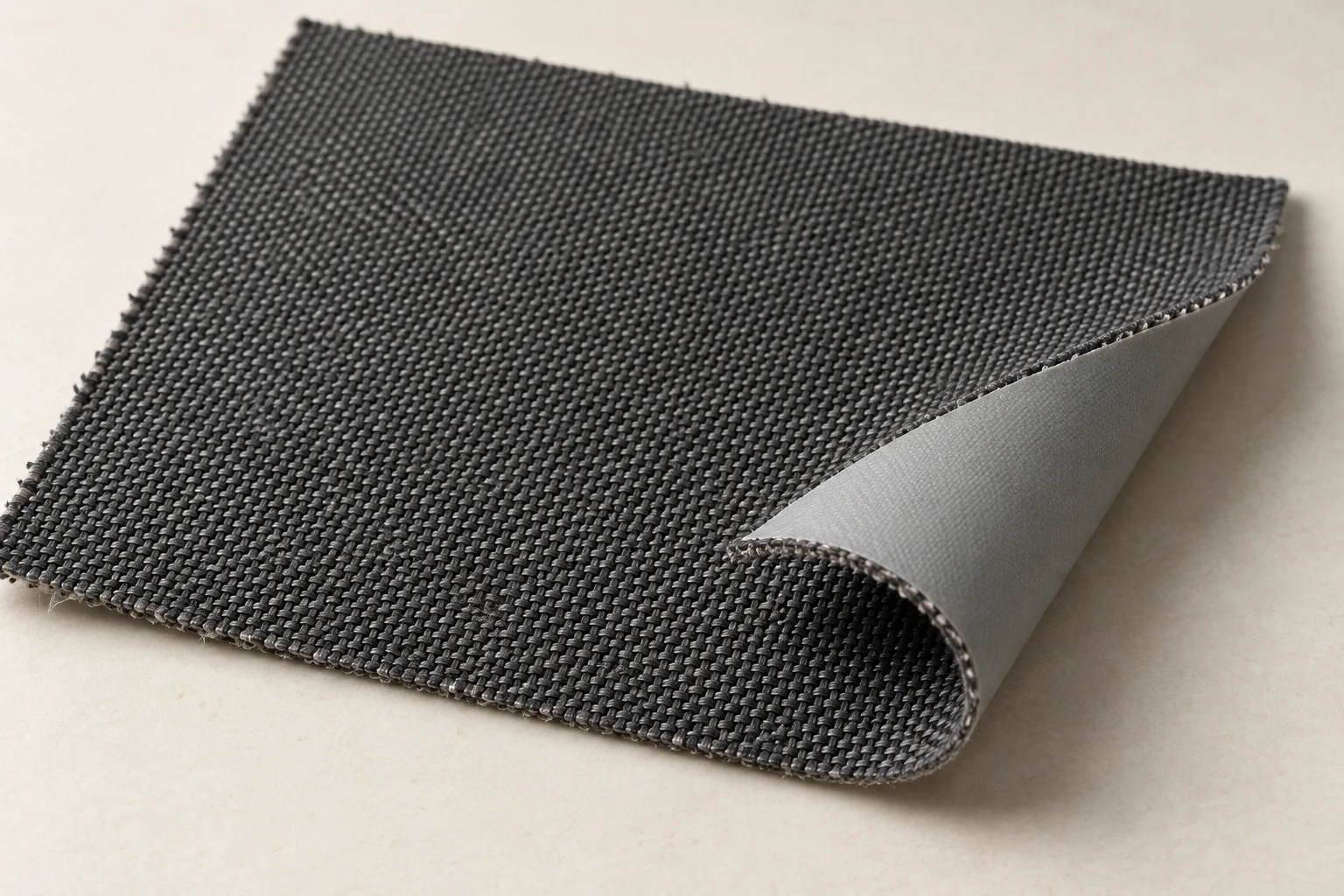
All fabric display diagrams in this article are generic AI-generated illustrations for reference only, not official factory inspection standards.
4 Non-Negotiable Decision Dimensions Before Selecting Bag Fabric
Before confirming any fabric sample, buyers must clarify four core dimensions. These standards determine your fabric’s wear resistance, waterproof/UV performance, market compliance, and final user review rating, serving as the core SEO and sourcing basis for custom bag development.
1. Usage Scenario (Determines Functional Tolerance)
Different application scenarios impose completely different functional requirements on fabrics. Outdoor and sports bags require UV resistance, abrasion resistance, and water repellency; travel bags need wrinkle resistance and durability; daily and gift bags prioritize texture and appearance stability. Matching fabric functionality to usage scenarios eliminates 80% of after-sales quality risks.
2. Target Unit Price & Product Positioning
Fabric grade directly matches product pricing. High-end boutique bags require soft, textured, high-tear-resistance nylon fabrics to support premium positioning and repurchase rates. Cost-effective mass-market and promotional bags prioritize stable, cost-efficient standard polyester to control overall order budgets and improve market competitiveness.
3. Sales Market & Compliance Standards
Regional market rules affect fabric material selection. European markets have stricter ESG environmental requirements, color fastness standards, and harmful substance limits, making RPET and OEKO-TEX certified fabrics more mainstream. The US market focuses on product durability, wear resistance, and safety stability, requiring fabrics with stable physical properties and qualified color fastness to avoid customs clearance and platform rejection risks.
4. E-Commerce Platform Review Requirements
Amazon and other premium e-commerce platforms have strict hidden evaluation rules for bag products. Platform algorithms and user reviews severely penalize fading, easy scratching, dust accumulation, and poor durability. For platform boutique listings, buyers must prioritize matte, anti-fouling, high-color-fastness, and UV-resistant fabrics to maintain stable star ratings and listing weight.
6 Mainstream Custom Bag Fabrics: Pros, Cons & Exact Applicable Scenarios
We sorted out the six most commonly used fabrics in custom bag OEM/ODM production, covering all mainstream styles from low-cost promotion to high-end outdoor boutique lines. The vertical comparison table helps buyers quickly complete scenario-based matching.
| Fabric Type | Core Advantages | Key Limitations | Best Applicable Scenarios |
|---|---|---|---|
| Standard Polyester | Low cost, stable batch consistency, fast production lead time, mature weaving process, low MOQ flexibility | Ordinary hand feel, prone to slight pilling after long-term friction, average texture performance | Corporate gift bags, promotional giveaway bags, short-cycle iterative products, low-budget mass-market styles |
| Nylon | Lightweight and soft, excellent tear resistance, premium smooth hand feel, strong texture performance, good flexibility | Higher unit cost than polyester, easy water absorption with poor waterproof performance without coating | High-end commuter backpacks, travel luggage bags, retail boutique bags, daily premium functional bags |
| Cordura | Ultra-high abrasion resistance, superior tear and tensile strength, strong load-bearing capacity, extreme durability | Hard fabric texture, heavy weight, high material cost, poor softness and comfort | Outdoor hiking bags, tactical gear bags, heavy-duty sports bags, adventure functional backpacks |
| RPET Recycled Polyester | Meets ESG environmental trends, supports GRS certification, fits European and American brand premium positioning, eco-friendly marketing highlights | Slightly higher batch color difference risk than ordinary polyester, stricter production process control requirements | Cross-border premium boutique bags, environmentally branded product lines, high-value retail customized styles |
| Canvas | Classic retro texture, wide audience acceptance, good thick wear resistance, strong lifestyle attributes | Heavy fabric weight, no natural waterproof performance, easy to absorb dust and stains | Casual tote bags, lifestyle daily bags, retro-style customized bags, fashion leisure accessories |
| High-Density Functional Fabric | Customizable UV resistance, waterproof and anti-fouling coating, stable physical properties, strong scene adaptability | Custom processing increases cost and lead time, not suitable for low-budget orders | Professional sports bags, outdoor functional bags, long-term stable retail products |
6 Most Common Fabric Sourcing Pitfalls That Cause Bad Reviews & Losses
Most fabric failures do not stem from poor material quality, but from mismatched selection and incorrect evaluation standards. We summarize six high-frequency pitfalls for new custom bag projects to help buyers avoid batch risks and after-sales losses.
- Only check D count, ignore fabric gram weight: Many suppliers falsely label D count as a selling point. The same D count with different gram weights leads to huge gaps in weaving density and durability. Pure D count judgment is the most typical industry misleading trap.
- Blindly pursuing high D count: Excessively high D count causes overly hard bag bodies, poor flexibility, and stiff hand feel, raising material costs unnecessarily and reducing user comfort without improving practical value.
- Outdoor bags without UV-resistant fabric: Long-term sun exposure causes rapid fading, color difference, and fabric aging, directly triggering concentrated low-star reviews about product durability.
- Sports bags using glossy finish fabrics: Glossy surfaces magnify scratches, dust, and sweat stains, resulting in obvious wear marks after short-term use and poor user experience feedback.
- Launching new products with RPET fabric directly: RPET has higher batch color difference sensitivity. Unverified mass production easily causes color inconsistency between batches, leading to order returns and customer rejections.
- Using high-end fabrics for gift bags: Short-term use promotional and gift bags have low durability requirements. Adopting premium fabrics causes severe cost waste and reduces overall project profit margins.
One-Click Fabric Selection Formula by Bag Category (Most Practical Sourcing Standard)
Based on mass production data and after-sales feedback of custom bags, we summarize fixed matching formulas for mainstream bag categories. Buyers can directly lock the optimal fabric solution according to product classification, eliminating trial-and-error costs.
- Tennis & Sports Bags: 500D/600D matte polyester + anti-fouling treatment + slight water repellency. Balances abrasion resistance, stain resistance, and comfortable appearance, avoiding scratch and dust complaints.
- Outdoor Hiking Bags: Cordura / high-density nylon + professional UV protection coating. Prioritizes extreme wear resistance, tear resistance, and anti-fading performance for complex outdoor environments.
- Travel Duffle Bags: Wrinkle-resistant thickened polyester. Solves folding and extrusion deformation problems during travel, maintaining long-term neat appearance.
- Daily Commuter Bags: Lightweight high-density nylon. Ensures soft premium hand feel, lightweight carrying experience, and durable daily wear performance.
- Eco-Friendly Brand Product Lines: RPET recycled polyester with official GRS certification. Meets European and American ESG trends and market compliance requirements for premium brand marketing.
- Promotional & Gift Bags: Standard stable polyester. Controls costs while ensuring qualified stability, perfectly matching short-cycle low-budget customization needs.
DIY Fabric Quality Inspection Methods for Buyers
Before mass production confirmation, buyers can complete preliminary fabric quality verification through simple manual tests to eliminate unqualified materials. Combined with our custom bag quality inspection standards, it effectively stabilizes batch quality.
- Weaving density check (light transmission test): Align the fabric with light to observe weave tightness. Uniform and dense weaving represents stable quality; sparse light transmission points mean poor durability and easy deformation.
- Hand feel inspection: Touch and rub the fabric surface repeatedly to judge softness, smoothness, and texture uniformity, eliminating rough, stiff, or uneven materials.
- Tear resistance test: Apply balanced force to stretch the fabric horizontally and vertically. High-quality fabric has strong toughness and is not easy to crack or deform.
- Scratch resistance test: Scrub the fabric surface with moderate force. Qualified functional fabric resists obvious scratch marks; low-quality fabric leaves permanent traces easily.
- Color fastness test: Conduct simple dry and wet wiping tests. Serious fading and color transfer indicate unqualified color fastness, which will cause clothing staining complaints.
Budget Optimization Fabric Matching Solutions (High Conversion Sourcing Tips)
Balancing low cost, low bad reviews, high texture, and market compliance is the core demand of most custom bag projects. The following mature optimization solutions are widely used in mass production to maximize project ROI.
- Limited budget solution: Adopt conventional standard fabric for the main bag body, and upgrade to high-density wear-resistant fabric for stress-bearing and friction-prone parts. Reduces costs while ensuring core durability.
- Premium texture solution: Choose lightweight nylon base fabric with professional matte finishing. Creates high-end soft texture without excessive cost premium.
- Low negative review solution: Prioritize matte, anti-fouling, thick woven fabrics. Avoid glossy surfaces that amplify scratches and dust, stabilizing user experience and review ratings.
- Market compliance solution: Select OEKO-TEX certified ordinary fabrics or GRS-certified RPET recycled fabrics to meet EU and US environmental and safety standards, avoiding compliance rejection risks.
FAQ: Custom Bag Fabric Sourcing & Selection Questions
Is higher D count always better for bag fabric? No. High D count brings higher hardness and cost. Daily and gift bags do not need ultra-high D fabric. Reasonable matching based on usage scenario is the best choice.
Is RPET fabric suitable for new product trial sales? Not recommended for first-time trial orders. RPET has higher batch color difference risks. It is more suitable for formal mass production after style confirmation and stable process docking.
Which fabric is the most Amazon-friendly? Matte thickened polyester and high-density nylon are the most stable options, with low fading, low scratching, and low complaint rates, fitting platform review rules best.
How to balance cost and durability for outdoor bags? Use high-density polyester with UV and waterproof coating as an economical alternative to Cordura, balancing outdoor functionality and budget control.
Key Takeaway
Custom bag fabric selection determines product cost, durability, user review performance, and cross-border compliance. Buyers must clarify four core dimensions: usage scenario, target unit price, sales market, and platform requirements. Different fabrics have fixed applicable boundaries: polyester for cost-effective gifts, nylon for high-end daily styles, Cordura for heavy-duty outdoor products, RPET for eco-friendly premium lines, and canvas for casual lifestyle bags. Avoid over-specification cost waste and under-specification quality risks. Adopt targeted inspection methods and budget matching strategies to achieve stable quality and high ROI new product development.
Accurate Custom Fabric Sourcing Support
Share your custom bag usage scenario, target budget, and sales country, and our team will provide you with the most accurate fabric selection and optimization solution to balance cost, texture, durability, and market compliance.