
Understand the structural cost differences between small-batch custom bags and mass-produced retail models. Learn why visually identical bags carry different unit prices based on development, tooling, production, and overhead logic.
By MAZ Outdoor · Buyer guide · October 20, 2026
Most custom bag buyers encounter a common pricing confusion: a fully custom small-batch bag often costs significantly more than seemingly identical mass-produced versions available on the open market. The common misconception is that similar appearance equals similar production cost. In reality, mass-produced stock bags and custom small-batch bags operate on two entirely different costing and production models.
Mass-produced bags benefit from fully amortized development costs, bulk sourcing, streamlined mass production, and accumulated process optimization. In contrast, small-batch custom bags require zero-base development, independent tooling, scattered material procurement, and disproportionate manual overhead. This guide breaks down every hidden cost factor that drives small-batch custom pricing, helping buyers evaluate quotations rationally and align project expectations with manufacturers.
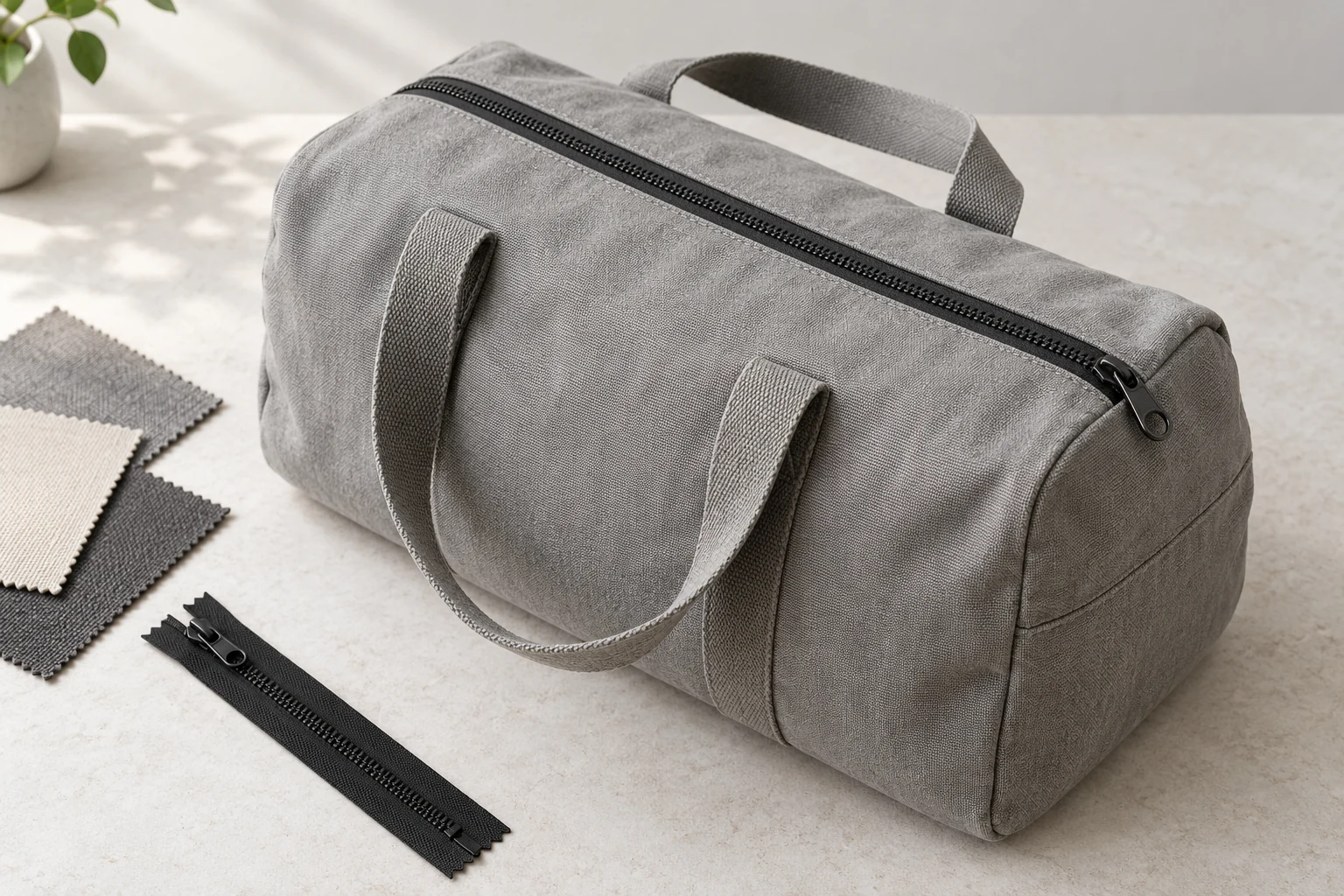
All images in this guide are AI-generated generic illustrations of bag structures and production workflows, not photos of tested MAZ Outdoor products or on-site production records.
Mass-Produced Bags: Pre-Amortized Zero-Cost Reusable Assets
Mature market-ready bags are not newly developed products for individual orders. They are standardized finished styles built on accumulated factory assets and historical bulk production.
Factories already own complete finished samples, mature paper patterns, standardized cutting layouts, and verified sewing processes for mass-produced bags. All initial development expenses—pattern drafting, structural testing, sample iteration, and process calibration—have been fully amortized by tens of thousands of previous bulk orders. For repeated mass production runs, there is no additional development cost, and all core technical assets are reused for free. This is the fundamental reason mass-produced bags maintain ultra-stable low unit prices.
Small-Batch Custom: Full Zero-Base Development Workflow
Every independent custom bag project starts from scratch with no reusable technical assets. The entire development workflow must be restarted exclusively for the buyer’s unique requirements, generating unavoidable fixed upfront costs.
The full custom development process includes demand confirmation, structural feasibility evaluation, dimensional calculation, professional paper pattern drafting, trial cutting and trial sewing, structural modification and optimization, and final style locking. Unlike stock styles with mature processes, every detail of a custom bag requires independent verification and adjustment, consuming intensive technical and labor resources before formal production.
Hidden Losses in Custom Sampling: Undercharged Fees & Uncompensated Revisions
Most factory sampling fees for custom bags are symbolic and far lower than actual production costs. Factories set low sample charges purely to facilitate subsequent bulk order cooperation, treating the sampling gap as a hidden upfront investment for potential long-term partnerships.
Furthermore, custom bag development almost always requires 2 to 3 rounds of revisions to optimize structure, fit, and workmanship. Each revision doubles or triples manual labor, material waste, and technician working hours. In most small-batch cases, factories bear all revision overhead independently without additional charges to buyers. These unquoted hidden costs are inevitably integrated into the final unit pricing of small-batch orders.
Fixed Development & Die Mold Costs: Volume Determines Amortization Pressure
All zero-base development and die tooling investments are fixed one-time costs for custom bag projects. Complex custom bags feature multiple segmented cutting pieces, often requiring sets of custom cutting dies to ensure precise cutting accuracy and consistent finished appearance.
Fixed tooling and development costs must be amortized into bulk order unit prices. Order volume directly determines the amortization ratio: for large orders of 1,000 units or more, fixed costs are evenly diluted across massive quantities, resulting in negligible single-unit sharing. For small-batch orders of 100 units or fewer, the same full fixed investment is borne solely by the tiny order volume, drastically raising individual bag costs with no room for dilution.
No Bulk Sourcing Advantage: Higher Raw Material Unit Prices
Material cost is a core variable affecting bag pricing. Factories producing mass-produced bags adopt centralized bulk procurement for fabrics, webbing, lining, and auxiliary materials, securing ultra-low bulk wholesale prices from suppliers.
Small-batch custom orders cannot support bulk procurement and can only purchase materials in scattered small quantities. Suppliers offer no volume discounts for sporadic orders, resulting in significantly higher raw material unit costs. The gap in basic material pricing forms another inherent cost disadvantage for small-batch customization.
Custom Hardware MOQ & Hidden Inventory Risk Costs
Mass-produced bags universally adopt universal spot hardware, including standard zippers, buckles, and pull tabs, with no customized thresholds or inventory pressure. Custom bags often require exclusive branded accessories: custom logo nameplates, personalized zipper pulls, and special-shaped buckles.
All customized hardware has strict supplier minimum order quantities (MOQs). Even if the buyer’s total order volume is small, the factory must purchase hardware per the supplier’s MOQ standard. Excess customized hardware becomes idle inventory, occupying factory capital and warehousing space. The resulting capital occupation, inventory risk, and waste loss are all converted into hidden costs for small-batch custom orders.
Frequent Production Changeovers Reduce Output Efficiency
Mass continuous production follows fixed assembly line procedures. Workers form skilled muscle memory for fixed processes, with stable rhythm and extremely high output efficiency, minimizing unit labor costs.
Small-batch custom bags belong to discontinuous personalized production. Each new small order requires full line adjustment: resetting machine parameters, adjusting presser foot height, rearranging sewing procedures, and reconfirming process standards. Workers need to readapt to new structures and craftsmanship, and the order is completed immediately after proficiency is established. Frequent line changes and low single-batch output lead to sharply increased unit labor costs and greatly reduced production efficiency.
Ultra-Low Defect Tolerance: Scrap Losses Increase Unit Pricing
Large-batch mass production has a sufficient quantity base to dilute defective product rates. Individual scrapped cut pieces or defective finished products barely affect overall average costs.
Small-batch custom orders have almost no fault tolerance margin. A single scrapped fabric piece, sewing error, or unqualified finished product cannot be offset by redundant inventory. In particular, premium materials such as genuine leather have natural texture flaws and scars, requiring manual selective cutting for small batches—greatly increasing screening labor and material waste costs. All scrapped losses and screening overhead are directly shared by the remaining qualified products, pushing up unit prices significantly.
Insertion Production: Hidden Opportunity Cost for Small Batches
Factory workshop production capacity is limited and prioritized for large, stable bulk orders that generate standardized profits. Small-batch custom orders are typically arranged as insertion production during gaps between large orders.
Arranging small custom orders occupies senior technician schedules and core workshop capacity, forcing factories to sacrifice opportunities to undertake high-volume bulk orders. This implicit capacity opportunity cost is unique to small-batch customization and does not exist in mass-produced projects.
Disproportionate Management, QC and Packaging Labor Overhead
Large-batch mass production supports centralized unified operation: unified inspection, unified sorting, unified packaging, and unified warehousing. Management and quality control labor costs are evenly diluted across tens of thousands of products, with extremely low single-unit management overhead.
Every small-batch custom bag order requires independent process tracking, separate quality inspection, manual counting and sorting, and exclusive customized packaging. The fixed management and QC working hours invested in a single small order are almost equivalent to those of large orders, resulting in a far higher proportion of management labor costs per unit product.
Capital Cost Disparity Between Large and Small Orders
For large-volume bulk procurement, factories can negotiate favorable account periods and deferred payment terms with raw material and hardware suppliers, reducing upfront capital pressure and financial costs.
Small-batch scattered procurement generally requires full advance payment or short-cycle settlement with no account period support. Factories need to advance all funds for materials, accessories, and production labor independently. The resulting capital occupation, interest losses, and financial risks form another hidden cost of small-batch custom bags.
Core Cost Comparison: Custom Small-Batch vs. Mass-Produced Bags
The visual similarity of bags cannot equate to identical production logic. The following table summarizes the essential differences between the two models for clear quotation evaluation:
| Cost Dimension | Mass-Produced Bags | Small-Batch Custom Bags |
| Development Cost | Fully amortized, zero additional cost | Full zero-base development, fixed one-time investment |
| Sample & Revision Cost | No sampling or revision required | Undercharged sample fee + factory-undertaken revision labor loss |
| Tooling & Die Cost | Tooling fully depreciated | Full tooling cost shared by tiny order volume |
| Raw Material Cost | Bulk procurement, lowest unit price | Scattered procurement, no volume discount |
| Hardware Accessory | Universal spot hardware, no MOQ pressure | Custom hardware with MOQ, excess inventory risk |
| Production Efficiency | Streamlined mass production, high efficiency, low labor cost | Frequent line changes, low proficiency, high unit labor cost |
| Defect & Waste Loss | Large volume dilutes scrap rate | Zero fault tolerance, scrap directly increases unit price |
| Management Overhead | Centralized operation, diluted management cost | Independent full-process management, high labor proportion |
| Capital Cost | Supplier account period support, low financial pressure | Full advance capital occupation, high financial cost |
FAQ: Common Buyer Questions About Custom Bag Small-Batch Pricing
Why do visually identical bags have huge price gaps? Visual appearance only reflects the final product effect, not the entire production and development cost chain. Mass-produced styles reuse fully amortized assets, while small-batch custom styles bear all zero-base development, tooling, labor and hidden risks independently. Different business models lead to inherent price differences.
Can small-batch custom prices be reduced to mass-production levels? No. Core fixed costs including pattern development, custom tooling, MOQ inventory risk and line changeover overhead cannot be eliminated. Only when the order volume increases enough to dilute fixed costs can the unit price approach mass-production levels.
Why do factories not charge separately for sample revisions and tooling fees? Most factories absorb these costs as upfront investment to maintain cooperative relationships. These implicit losses are not free costs but are reasonably amortized into small-batch unit prices to sustain standardized production quality and service.
Is small-batch customization still valuable despite higher unit prices? Yes. Small-batch customization supports exclusive structural design, personalized branding, customized hardware and targeted functional optimization, which standardized mass-produced products cannot achieve. It is the optimal solution for niche markets, high-end customization, trial sales and customized gift orders.
Key Takeaway & Custom Project Brief Guide
The core pricing misunderstanding for custom bags lies in simply comparing appearance while ignoring essential production model differences. Mass-produced bags are mature standardized commodities with all upfront development costs fully amortized by historical large orders. Small-batch custom bags are brand-new independent projects, where all fixed development, tooling, labor, risk and capital costs are solely borne by the single small-batch order.
For accurate and transparent custom bag quotations, clarify your customization requirements, functional needs, order volume and personalized accessory standards in your project brief. Refer to the custom bag quote checklist to sort out all demand details, avoiding quotation deviations caused by incomplete information.
Send your custom bag design and volume plan to MAZ Outdoor. We provide transparent cost breakdowns, standardized pre-production development and stable small-batch customized production solutions for brand buyers and custom project clients.