Define clear custom bag stitching rules, seam types, stitch density, and stress-point reinforcement for pre-production approval. Avoid inconsistent workmanship, loose seams, and structural failure by specifying stitch details in your tech pack.
By MAZ Outdoor · Buyer guide · October 20, 2026
Clean, uniform stitching on a sample photo does not guarantee structural durability in bulk production. Many custom bag quality issues stem from vague stitching specifications: undefined stitch density, unapproved seam allowance, missing reinforcement at stress points, and inconsistent thread weight.
For brand owners and custom bag buyers, stitching is not cosmetic detail—it is the core structure that holds straps, hardware, panels, and load-bearing areas together. This guide breaks down how to write precise stitching and seam requirements for your RFQ, what to verify on pre-production samples, and how to eliminate subjective “neat workmanship” judgments that lead to bulk order disputes.
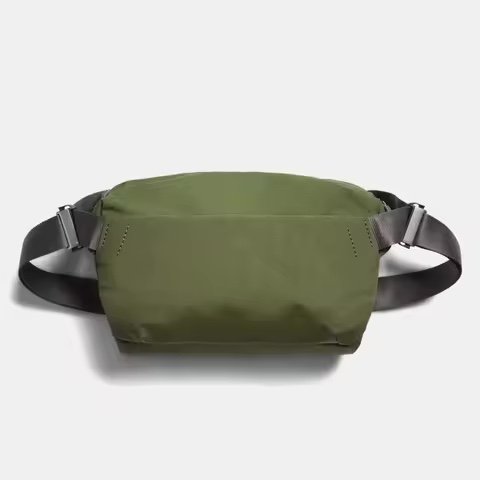
All images in this guide are AI-generated generic illustrations of bag stitching structures, not photos of tested MAZ Outdoor products or bulk production standards.
Why Vague Stitching Specs Cause Bulk Order Failures
Most buyers only request “clean stitching, no loose threads” in their project brief. This open-ended requirement allows factories to apply inconsistent stitch density, uneven seam allowance, and weak reinforcement across different production batches.
A visually neat seam on a lightweight decorative tote may fail on load-bearing backpacks, duffel bags, or outdoor gear. Surface appearance never replaces structural stitching standards. Finished bag durability depends on three fixed factors: thread specification, stitch density, and reinforced seam construction.
Key Stitching Parameters to Include in Your Tech Pack
Standardize all stitching details in your custom bag specification to unify understanding between buyers and manufacturers. Below is the verified checklist for RFQ confirmation and sample inspection:
| Stitching Parameter | What to Specify in RFQ & Tech Pack | What to Verify on Pre-Production Samples |
|---|---|---|
| Thread Specification | Thread material (polyester/nylon), thread weight, color matching standard, abrasion resistance requirement | Thread color consistency with bag body, no color deviation under multi-light sources, uniform thread thickness |
| Stitch Density | Fixed stitches per inch (SPI) for normal seams and stress seams; no arbitrary adjustment | Consistent stitch spacing, no uneven density, no skipped or loose stitches |
| Seam Allowance | Uniform seam width for all panel joints, folded edge standard, raw edge treatment rules | No irregular seam width, no exposed raw edges, consistent folding alignment |
| Reinforcement Stitching | Box stitch, cross stitch, bar tack position and size for all stress points | Reinforcement coverage matches stress area, no incomplete stitching or broken stitches |
| End Stitch Locking | Backstitch locking length for opening ends, pocket edges and strap joints | Firm locking stitches, no loose thread ends, no unfastened stitch tails |
Common Custom Bag Seam Types & Application Scenarios
Different bag structures require matched seam types. Using a universal seam method for all areas leads to either excessive cost or insufficient durability.
1. Plain Straight Seam Applicable for non-load-bearing flat panel joints, tote bag main body, decorative surface stitching. Requires uniform SPI and clean edge folding, no structural reinforcement needed.
2. Double Stitched Seam Standard for daily custom bags, backpacks, and casual shoulder bags. Double parallel stitching improves tensile strength and avoids panel separation during daily use.
3. Box-and-Cross Reinforced Seam Mandatory for all stress connection points: strap attachments, handle joints, D-ring bases, and heavy-load pocket corners. The box frame plus cross stitching disperses pulling force and prevents seam tearing.
4. Bar Tack Stitching High-strength localized reinforcement for narrow stress points. Widely used for webbing connections, adjustable strap holes, and hardware fixed positions.
Critical Stress Points That Require Reinforcement
Most stitching damage occurs at unapproved stress points, not ordinary flat seams. Buyers must mark all reinforcement positions clearly on construction drawings instead of relying on factory experience.
- Shoulder strap and handle connection bases
- Webbing loop and hardware D-ring fixed points
- Gusset side panel and main body joints
- Zipper two-end fixed stitching
- Deep pocket corners and partition joints
- Bottom bearing splicing seams for travel bags and backpacks
Industry Standard Reference for Seam Performance
Visual stitching inspection cannot replace tensile performance verification. Consistent with industry testing rules, custom bag seam strength refers to ASTM D1683/D1683M-22 standard for sewing seam performance testing.
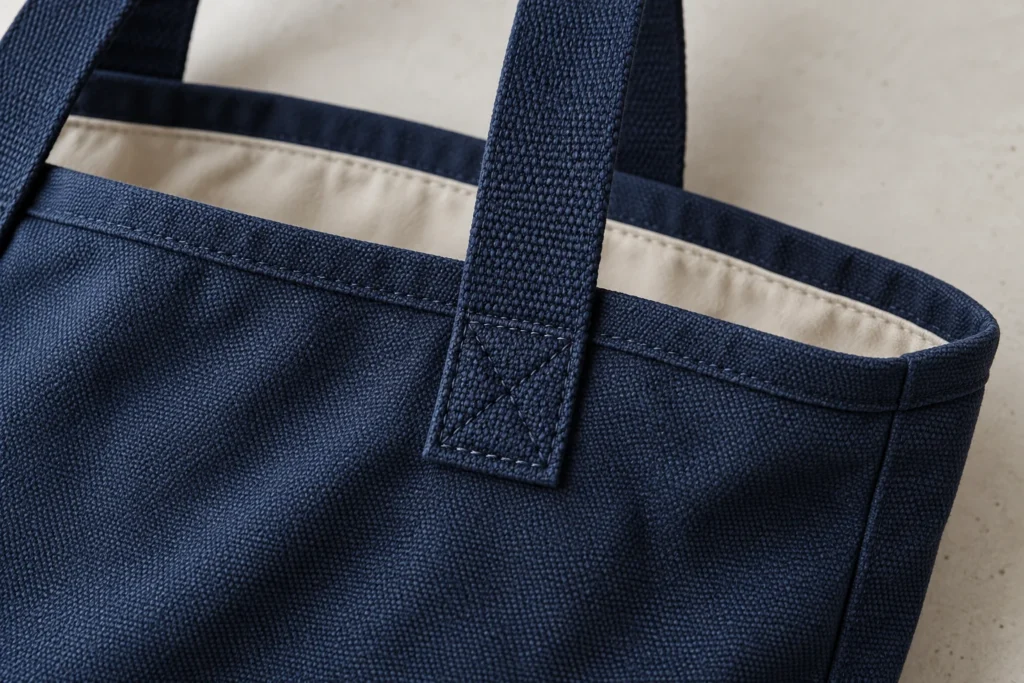
A neat stitch appearance does not guarantee qualified seam tensile strength. If your product requires load-bearing or durability claims, specify seam tensile test values and cycle testing requirements in your pre-production brief. Raw material thread strength cannot represent finished seam performance—stitch density and sewing process directly affect final durability.
Common Stitching Defects & Approval Rules
Define clear defect judgment standards to avoid inconsistent QC standards between samples and bulk goods:
- Skipped stitches & floating stitches: Not allowed on main seams and stress seams; minor floating threads on decorative seams require trimming uniformly
- Uneven stitch density: No obvious spacing difference on the same continuous seam
- Exposed raw edges: All inner stitching edges must be folded and wrapped, no bare fabric or thread residue
- Missing reinforcement: Zero tolerance for missing box stitching or bar tacks at marked stress points
- Wrong thread color: Thread color must match approved color standard, no color difference under natural and indoor light
FAQ: Buyers’ Most Common Stitching & Seam Questions
Does denser stitching always mean stronger seams? Not necessarily. Excessively dense stitches may pierce and damage fabric fibers, reducing tear resistance. Stitch density must match fabric thickness and load requirements. Lightweight PU and thin nylon require lower SPI than thick canvas and outdoor woven fabric.
Can decorative seams use different stitch standards? Yes. Non-structural decorative stitching can adopt adjusted density, but must be confirmed on sample approval. Structural load-bearing seams must follow unified reinforced standards regardless of appearance design.
Do all bag styles need box-and-cross stitching? No. Lightweight promotional tote bags with zero load pressure only need standard double stitching. Heavy-load outdoor bags, laptop backpacks, and travel duffels require full stress-point cross reinforcement.
Can stitching details be adjusted during bulk production? No. All stitching standards must be locked at the pre-production sample stage. Any adjustment to stitch density, reinforcement range or thread specification requires re-sample approval before mass production.
Final Stitching Brief for Accurate Quotation & Production
To avoid stitching inconsistency and production disputes, include full stitching requirements in your custom bag project brief: thread specification and color standard, fixed stitch density for all seam types, clear reinforcement positions and stitching methods, raw edge treatment rules, and performance test requirements (if applicable).
Align your stitching specification with the custom bag quote checklist and pre-production sample approval standard to unify quotation, sampling and bulk production standards.
Send your custom bag design and stitching requirements to MAZ Outdoor for professional pre-production review, standardized sample confirmation and stable bulk production quality control.